
Identifying Hormonal Acne
There is no single "look" for hormonal acne, but doctors often suspect it when breakouts:
Follow a Pattern: Predictably worsen before or during menstruation.
Occur in Specific Areas: Frequently appear around the chin, jawline, or lower face.
Are Persistent: Are deep, tender, nodular, or cystic, and resistant to standard acne treatments.
Appear with Other Signs: In some women, it may be linked to irregular periods, excessive hair growth, or thinning hair (though these are not required to have hormonal acne).
Why It Happens
Hormonal acne shares the same basic causes as regular acne (excess oil, blocked follicles, bacteria), but it is intensified by:
Increased Oil Production: High androgen levels (or sensitivity to them) overstimulate sebaceous glands, leading to more oil.
Blocked Pores: Excess oil traps dead skin cells, leading to clogged pores and inflammation.
Treatment Approaches
Because hormonal acne is complex, the page emphasizes that treatment should be personalized based on severity, medical history, and goals. Treatments often include:
Medical Skincare: Targeted topical treatments to unclog pores and manage oil.
Oral Medications: Options like antibiotics or isotretinoin (for severe or scarring cases).
Hormonal Therapies: Specific treatments for select female patients.
In-Clinic Procedures:
Acne facials for decongestion.
Pimple injections for rapid relief of large cysts.
Lasers to address inflammation, redness, and scarring.
Advice for Teenagers (and General Care)
The page also provides specific guidance for teens:
Consult a doctor early: Don’t wait if the acne is painful, scarring, or not improving with over-the-counter products.
Stop picking/squeezing: This forces inflammation deeper and increases the risk of permanent scarring.
Simplify: Avoid aggressive scrubs or frequently changing products, which can damage the skin barrier.
Semaglutide 7.2 mg and 2.4 mg contain the same active ingredient and act through the same GLP-1 pathway. The main difference is the weekly maintenance dose, with implications for both weight-loss response and tolerability.
|
Treatment feature |
Semaglutide 2.4 mg |
Semaglutide 7.2 mg |
|
Active ingredient |
Semaglutide |
Semaglutide |
|
Frequency |
Once weekly |
Once weekly |
|
Role in treatment |
Established maintenance dose |
Higher maintenance dose for selected adults with obesity |
|
Dose progression |
Reached through gradual escalation from lower doses |
Considered after treatment at 2.4 mg and further assessment |
|
Tolerability in STEP UP |
Lower rates of gastrointestinal events and altered skin sensations |
Higher rates of these events |
A higher dose may be considered when further weight reduction is expected to improve health and treatment at 2.4 mg has been tolerated. A plateau alone does not establish that escalation is necessary; your doctor should first review treatment consistency, lifestyle factors and the benefits already achieved.
No. Patients achieving satisfactory weight and health improvements on 2.4 mg may continue that dose. Persistent digestive symptoms or difficulty eating and drinking adequately warrant a review before any increase.
For more information about semaglutide 2.4 mg, read:
https://botoxsingapore.sg/wegovy-singapore-weekly-weight-loss-injections/
Weight-loss medications can differ in their active ingredient, receptor targets and method of administration. Understanding these distinctions helps explain why a higher-dose semaglutide injection cannot simply replace another treatment at an equivalent number of milligrams.
Oral semaglutide is taken daily, while injectable semaglutide is administered weekly. Both contain the same active ingredient, but differences in absorption mean their doses and administration instructions are not interchangeable.
A 7 mg semaglutide tablet is not equivalent to a 7.2 mg weekly injection. The similar numbers do not indicate comparable exposure, effectiveness or suitability. Oral and injectable formulations may also have different approved indications.
Learn more about oral and injectable semaglutide here:
https://botoxsingapore.sg/semaglutide-rybelsus-ozempic-wegovy-in-singapore-guide/
Semaglutide activates GLP-1 receptors, while tirzepatide acts on both GLP-1 and GIP receptors. Both are administered as weekly injections, but they are different medications with separate dosing schedules.
|
Treatment feature |
Semaglutide 7.2 mg |
Tirzepatide |
|
Active ingredient |
Semaglutide |
Tirzepatide |
|
Receptor targets |
GLP-1 |
GLP-1 and GIP |
|
Administration |
Once-weekly injection |
Once-weekly injection |
|
Dose selection |
Higher maintenance dose after semaglutide escalation |
Separate escalation schedule specific to tirzepatide |
The number of receptor targets alone does not determine which medication is best for a patient. Treatment choice also depends on medical history, previous response, side effects and prescribing criteria.
STEP UP compared semaglutide 7.2 mg with semaglutide 2.4 mg and placebo; it did not compare 7.2 mg with tirzepatide. Results from separate trials cannot establish which would produce greater weight loss for an individual patient.
Read more about tirzepatide here:
https://botoxsingapore.sg/mounjaro-tirzepatide-weight-loss-injections-in-singapore/
Switching requires a doctor’s assessment of your current medication, dose, last administration and tolerability. Previous use of another GLP-1 treatment does not establish that you can start semaglutide at 7.2 mg.
Do not overlap treatments or calculate a replacement dose yourself. Your prescribing doctor should provide a clear transition plan.
STEP UP was a 72-week randomised trial involving 1,407 adults with obesity without diabetes. Participants received semaglutide 7.2 mg, semaglutide 2.4 mg or placebo, alongside a reduced-calorie diet and increased physical activity.
In the published trial, average weight reduction was 18.7% with 7.2 mg and 15.6% with 2.4 mg in the analysis that accounted for treatment discontinuation and additional weight-management interventions.

|
Analysis at 72 weeks |
Semaglutide 7.2 mg |
Semaglutide 2.4 mg |
Placebo |
|
Regardless of treatment discontinuation or additional weight-management interventions |
18.7% |
15.6% |
3.9% |
|
Assuming continued assigned treatment without other weight-loss medication or bariatric surgery |
20.7% |
17.5% |
2.4% |
The first row reports the treatment-policy analysis, which estimates outcomes regardless of treatment discontinuation or use of additional weight-management treatment. The second reports the trial-product analysis, which estimates outcomes assuming continued assigned treatment without another weight-loss medicine or bariatric surgery. Both are model-based clinical-trial estimates, and individual results in everyday practice may differ.
For someone starting at 100 kg, an 18.7% reduction would equal 18.7 kg, leaving a body weight of 81.3 kg. This is an illustration of the percentage calculation, rather than a prediction for a patient starting at that weight.
Individual results depend on treatment response, tolerability, adherence and other health and lifestyle factors. The study percentages describe total weight change from the start of treatment, including the dose-escalation period.
The higher dose provided approximately 3.1 to 3.2 percentage points more average weight reduction than 2.4 mg. Three times the medication dose did not produce three times the weight loss.
STEP UP was not specifically a study of patients switching after a prolonged plateau on 2.4 mg. The difference between groups does not mean that a patient already taking 2.4 mg should expect to lose another 3.1–3.2% after increasing the dose.
Adults with obesity and type 2 diabetes were studied separately in STEP UP T2D. Their results should be considered separately when discussing treatment expectations.
Semaglutide 7.2 mg may be considered for selected adults with obesity following treatment at lower doses. A medical assessment establishes whether the higher dose is appropriate, taking into account prescribing criteria, previous response and any conditions that could increase treatment risks.

Your doctor will review:
The main STEP UP trial enrolled adults with a BMI of at least 30 kg/m². Meeting this trial criterion does not automatically establish suitability, and the higher dose is not intended simply to accelerate weight loss for cosmetic goals.
Tell your doctor about previous pancreatitis, gallbladder problems, kidney disease, diabetic retinopathy and persistent digestive symptoms. Semaglutide is not recommended for patients with severe gastroparesis, a condition in which the stomach empties very slowly.
Semaglutide should not be used following a serious allergic reaction to the medication or its ingredients. A personal or family history of medullary thyroid carcinoma, or multiple endocrine neoplasia syndrome type 2 (MEN-2), must also be disclosed; these are contraindications under US prescribing information.
The assessment should follow the prescribing information for the specific product supplied.
Semaglutide should not be used for weight management during pregnancy and should be stopped at least two months before a planned pregnancy. The UK prescribing information for the 7.2 mg injection also advises against use during breastfeeding. Discuss pregnancy plans or breastfeeding with your doctor before treatment.
Patients with type 2 diabetes require a coordinated review of their diabetes medications. Insulin or sulfonylurea doses may need adjustment to reduce the risk of low blood glucose. These changes should be made by the treating doctor; semaglutide must not replace prescribed insulin.
Learn more about medical assessment and doctor-supervised weight management here:
Starting treatment involves a medical consultation, gradual dose escalation and instruction on using the prescribed injection. The treatment plan depends on whether you are new to semaglutide or already receiving a maintenance dose.
The consultation establishes which medication and dose, if any, fit your needs. Your doctor may recommend blood tests based on your medical history and existing results.
The consultation should also cover realistic expectations, potential side effects and follow-up arrangements. If you already use a weight-loss injection, bring details of the medication, dose and date of your last injection.
For adults starting the injectable semaglutide weight-management regimen described here, the dose is increased gradually to help improve tolerability. The following schedule illustrates the earliest potential progression towards 7.2 mg when each stage is tolerated:
|
Treatment period |
Once-weekly dose |
|
Weeks 1–4 |
0.25 mg |
|
Weeks 5–8 |
0.5 mg |
|
Weeks 9–12 |
1 mg |
|
Weeks 13–16 |
1.7 mg |
|
Weeks 17–20 |
2.4 mg |
|
Week 21 onwards |
Continue 2.4 mg, or consider 7.2 mg if clinically appropriate |
Increasing to 7.2 mg requires at least four weeks on 2.4 mg, acceptable tolerability and a clinical need for further weight reduction. It is not an automatic step at week 21. Your doctor should follow the prescribing information for the specific product supplied.
If significant gastrointestinal symptoms develop, your doctor may delay an increase or adjust treatment. Patients already taking semaglutide, switching medicines or restarting after a treatment interruption need an individual dosing plan.
Semaglutide is injected under the skin of the abdomen, thigh or upper arm once weekly, usually on the same day each week. It can be administered with or without food.
Your clinic should demonstrate how to use the specific prescribed pen and explain injection-site rotation, storage, needle disposal and what to do if you miss a dose. Instructions can differ between presentations, so follow the directions supplied with your medication.
Do not increase the dose, combine injections or restart at a previous high dose without checking with your prescribing doctor.
Before treatment, the doctor will confirm the treatment areas, review the planned injection points and ensure that there are no contraindications. The skin is cleaned thoroughly before the injections are performed.
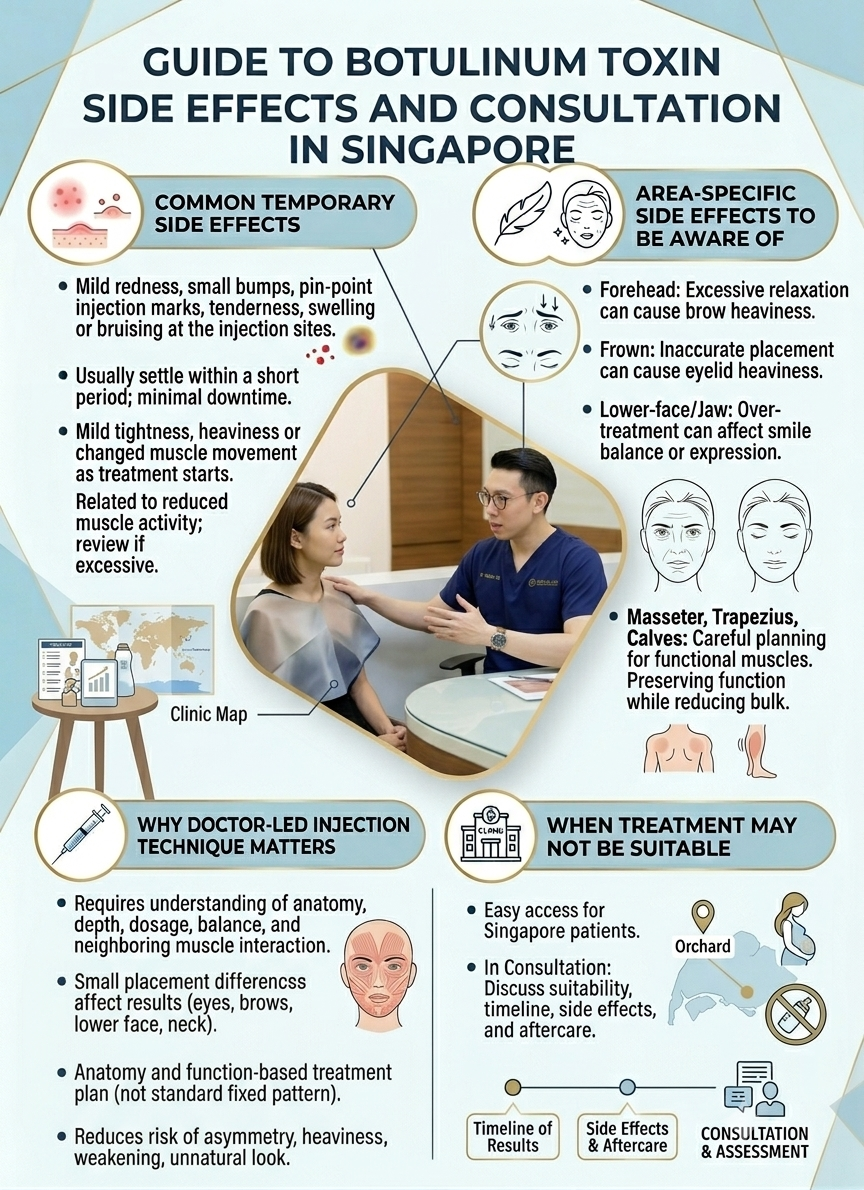
For facial treatments, patients may be asked to make certain facial expressions, such as raising the eyebrows, frowning or smiling. This allows the doctor to identify the active muscles more accurately before placing the injections.
Botulinum toxin is injected into selected muscles using a fine needle. Most patients describe the sensation as brief and tolerable, with only mild discomfort during the injection.
The number of injection points depends on the treatment area. Smaller areas such as frown lines or crow’s feet usually require fewer injection points, while larger muscle groups such as the masseter, trapezius or calf muscles may require more detailed placement and higher total dosage.
After treatment, there may be mild redness, small bumps, pin-point marks or slight tenderness at the injection sites. These usually settle within a short period.
Patients are usually able to return to normal daily activities after treatment. However, aftercare instructions should be followed carefully to reduce the risk of bruising, unnecessary pressure on the treated areas or unintended spread of the product.
For more detailed aftercare instructions, please refer to:
https://botoxsingapore.sg/botox-aftercare-guide-singapore/
Digestive symptoms are the most common side effects of semaglutide treatment. The STEP UP trial also found that altered skin sensations occurred more frequently with 7.2 mg than with 2.4 mg. Understanding these effects can help patients recognise when to contact their doctor.
Possible side effects include nausea, vomiting, diarrhoea, constipation and abdominal discomfort. Headache and fatigue can also occur, particularly during dose escalation.
Symptoms may improve over time, but persistent problems affecting eating, drinking or daily activities require review.
The published STEP UP trial in adults with obesity without diabetes reported the following adverse-event rates:
|
Reported adverse event |
Semaglutide 7.2 mg |
Semaglutide 2.4 mg |
|
Gastrointestinal events |
70.8% |
61.2% |
|
Altered skin sensations, described as dysaesthesia |
22.9% |
6.0% |
Dysaesthesia may involve tingling, burning or unusually sensitive skin. Report new or persistent changes in sensation to your doctor.
These figures describe participants reporting events during the trial. Severity and duration varied; an event did not necessarily persist throughout treatment.
Smaller meals, stopping when comfortably full and maintaining hydration may help. If rich or fatty foods worsen symptoms, reducing them may be useful.
Contact your doctor if symptoms persist. Treatment may need a slower escalation schedule, a dose adjustment or prescribed symptom relief.
Seek urgent assessment for:
Stop treatment and seek emergency help for difficulty breathing or swelling of the face, lips, tongue or throat. If severe, persistent abdominal pain develops, withhold further doses and seek urgent assessment for possible pancreatitis.
Follow-up appointments assess whether the benefits of treatment continue to justify the dose. Reviews should consider health, physical function and tolerability alongside weight change.
Your doctor may review:
These findings help guide decisions about continuing, adjusting or changing treatment.
Weight loss can include muscle loss as well as fat loss. Protein-containing foods, adequate overall nutrition and suitable resistance exercise can help support muscle health, although they cannot guarantee complete preservation of muscle.
Advice should account for your age, fitness and medical conditions, including kidney disease. Report persistent weakness, declining strength or difficulty eating enough so that your nutrition and treatment can be reviewed.
Treatment may extend beyond the initial weight-loss phase. Reaching a target weight does not automatically mean treatment should stop or that 7.2 mg remains the appropriate dose indefinitely.
Weight regain can occur after stopping semaglutide. If treatment is reduced or discontinued, agree on a plan for monitoring weight, appetite and health, with continued nutritional and physical-activity support.
Both doses contain semaglutide and act through the same GLP-1 pathway. The difference is the amount administered each week. The higher dose may provide additional weight reduction, but it also increases the likelihood of certain side effects.
No. Previous use of another injection does not establish that you can tolerate semaglutide 7.2 mg. Your doctor will consider the medication used, your last dose and your treatment history when planning a transition. Doses of different medicines are not interchangeable.
No. In the published STEP UP treatment-policy analysis, average weight reduction at 72 weeks was 18.7% with 7.2 mg and 15.6% with 2.4 mg. The difference was 3.1 percentage points of starting body weight.
It may help selected patients, but further weight loss is not guaranteed. STEP UP did not specifically test switching patients who had plateaued after prolonged treatment with 2.4 mg. Your doctor should review your overall response and possible reasons for the plateau before recommending a change.
This depends on the prescribed presentation. A dedicated 7.2 mg pen can deliver the dose in one injection, while other prescribed arrangements may involve multiple injections. Follow the instructions for your specific product and do not combine pens or calculate doses yourself.
Check the patient leaflet supplied with your medication or contact your clinic, as missed-dose instructions can differ between products. Do not double the dose to compensate. If you have missed several weekly injections, speak to your doctor before restarting because a lower restart dose may be needed.
Semaglutide should not be used alongside another semaglutide product or another GLP-1 receptor agonist, including tirzepatide, which also acts on GIP receptors. Tell your doctor about all weight-management and diabetes medicines you take so that any transition can be planned appropriately.
Not necessarily. Maintaining weight loss may require ongoing treatment, but the appropriate dose and duration should be reassessed. Your doctor will consider your current weight, health benefits, nutritional intake and side effects when planning the next stage.
Tell the treating team that you use semaglutide, particularly before general anaesthesia or deep sedation. Delayed stomach emptying may increase the risk of stomach contents entering the lungs during these procedures. Follow the team's individual instructions about medication and fasting.
If you are considering semaglutide 7.2 mg, a consultation can help clarify whether increasing the dose fits your treatment needs. The discussion may also identify reasons to continue your current dose or consider another approach.
At Edwin Lim Medical Aesthetic Clinic, Dr Edwin Lim will review your treatment history, health goals and experience with previous medication. Bring the name and dose of any weight-loss treatment you currently use, along with details of your progress and side effects.
The aim is to develop a treatment plan with realistic expectations, appropriate monitoring and support for maintaining your results.
Learn more about Dr Edwin Lim here:
https://botoxsingapore.sg/about/
To arrange a consultation at our Changi City Point or Lucky Plaza (Orchard) clinic, visit:
https://botoxsingapore.sg/contact-us/
Phone: +65 6904 2218
WhatsApp messages: +65 9637 2218
Email: hello@edwinlimclinic.sg
The cost of botulinum toxin treatment in Singapore varies depending on the treatment area, number of muscles treated, dosage required, complexity of the injection plan and whether the treatment is performed for facial lines, facial slimming, body contouring or excessive sweating. A doctor’s assessment is needed to determine the appropriate dose and treatment approach.
Different treatment areas require different levels of planning and product dosage. Smaller facial areas, such as frown lines or crow’s feet, usually involve fewer injection points compared with larger muscle areas such as the masseter, trapezius or calf muscles.
The cost may therefore differ depending on whether the treatment is for expression lines, jaw slimming, shoulder slimming, calf slimming or excessive underarm sweating.
Botulinum toxin treatment is commonly planned according to the number of units required for the target muscle. The required dosage depends on muscle size, muscle strength, treatment goals, previous treatment history and the desired degree of muscle relaxation.
For example, a patient with stronger masseter muscles may require a different dose compared with someone with milder muscle activity. Similarly, larger body muscles usually require a different dosage approach compared with smaller facial muscles.
For more information on dosage planning, please refer to:
https://botoxsingapore.sg/blog/how-much-botox-is-needed-guide-to-botox-dosage/
Larger muscles such as the masseter, trapezius and calf muscles generally require a higher total dosage than smaller facial muscles. This is because the treatment needs to reduce activity across a larger muscle area while maintaining safety and function.
The appropriate dose should be personalised rather than chosen based only on the treatment name. Careful assessment helps balance visible results, natural movement, safety and cost-effectiveness.
A consultation allows the doctor to assess the treatment area, muscle strength, facial or body anatomy, treatment goals and whether botulinum toxin is suitable. After assessment, the clinic can advise on the recommended treatment plan and estimated cost.
Patients should avoid choosing treatment based only on the lowest advertised price, as dosage, dilution, injector experience, assessment quality and aftercare can all affect the overall safety and outcome.

Copyrights 2026 by Edwin Lim Medical Aesthetic Clinic Pte. Ltd.


