
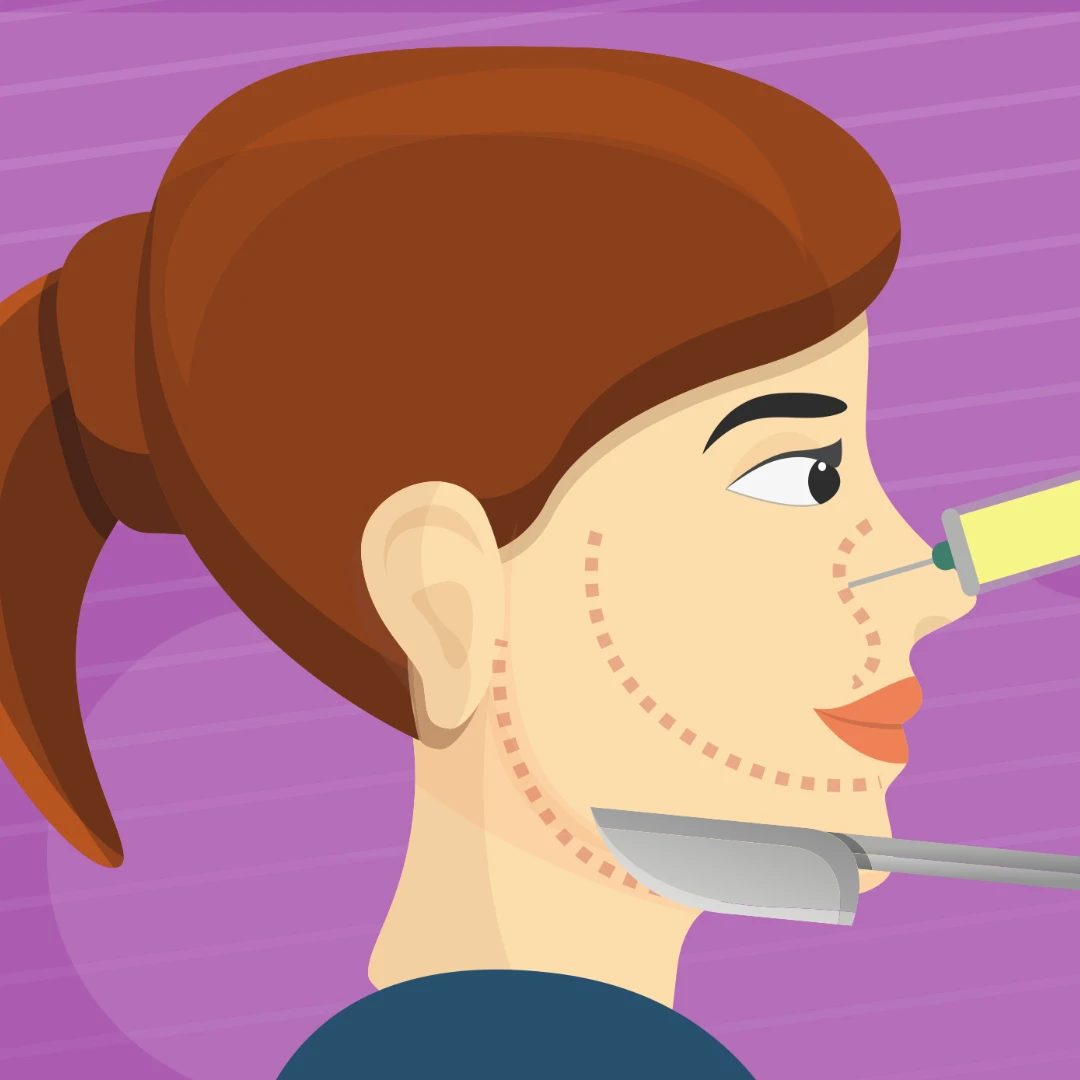


For jaw slimming and masseter reduction, a commonly used guide is approximately 20 to 30 units per side. This means that many patients may require treatment on both sides of the jaw, with the final total dose adjusted according to muscle size and facial proportions.
The aim is not simply to use the highest possible dose. The goal is to relax the masseter muscles sufficiently to reduce excessive muscle activity and gradually slim the jawline, while preserving normal chewing function and natural facial movement.
For a broader overview of how botulinum toxin units may vary across different treatment areas, you may read our dosage guide here:
https://botoxsingapore.sg/blog/how-much-botox-is-needed-guide-to-botox-dosage/
Jaw slimming botulinum toxin dosage differs from patient to patient because masseter muscle size can vary significantly. Some patients have naturally bulky masseter muscles due to genetics, while others develop stronger muscles from repeated jaw clenching, teeth grinding or frequent chewing habits.
Dosage may also differ between the left and right sides of the jaw if one masseter muscle is stronger or more prominent than the other. During consultation, Dr Edwin will assess for asymmetry and customise the injection plan accordingly.
The dosage required for aesthetic jaw slimming may differ from the dosage required for jaw clenching, teeth grinding or bruxism. Some patients are mainly concerned about a square jawline, while others may be more concerned about jaw tension, morning jaw discomfort or clenching-related symptoms.
For patients with both enlarged masseter muscles and bruxism symptoms, the treatment plan may need to address both facial contouring and muscle overactivity. This is why the dose, injection points and treatment intervals should be medically assessed rather than standardised for every patient.
A proper medical assessment is important because over-treating the masseter muscles may cause excessive chewing weakness, facial imbalance or an overly slim lower face. Under-treating the muscles may lead to less noticeable jaw slimming or shorter-lasting improvement.
Dr Edwin will customise the dosage based on your masseter muscle strength, lower face shape, facial proportions, previous treatment history and desired outcome. This helps achieve a slimmer and more balanced jawline while maintaining a natural appearance.
Jaw slimming botulinum toxin results are gradual because the masseter muscles need time to relax and reduce in size. Unlike treatments that create an immediate change in facial volume, masseter reduction works by reducing the activity of the jaw muscles over time. As the treated masseter muscles become less active, they may gradually become smaller, helping the lower face appear slimmer, softer and less square in suitable patients.
Some patients may first notice an improvement in jaw tension, jaw clenching or teeth grinding before visible facial slimming becomes obvious. This is because muscle relaxation can occur before the masseter muscles have had enough time to reduce in bulk. Visible jaw slimming usually becomes more noticeable over several weeks as the lower face gradually appears more tapered.
During the first 1 to 2 weeks after jaw slimming botulinum toxin treatment, some patients may notice that the jaw muscles feel less tight or less powerful when clenching. Patients who experience jaw clenching, teeth grinding or bruxism may notice early improvement in jaw tension or muscle overactivity, although the response varies between individuals.
At this stage, visible jaw slimming is usually still mild. This is because the masseter muscles have started to relax, but the reduction in muscle bulk usually takes more time.
By around 3 to 4 weeks, early jaw slimming may become more noticeable. The lower face may begin to look softer, slimmer or less square, especially in patients whose facial width is mainly due to enlarged masseter muscles.
Patients with stronger or bulkier masseter muscles may need more time before the full slimming effect becomes obvious. The degree of improvement also depends on factors such as masseter muscle size, treatment dose, jaw clenching habits and individual response to botulinum toxin.
Jaw slimming results are often more visible by around 6 to 8 weeks. At this stage, the masseter muscles have had more time to reduce in activity and size, allowing the jawline to appear slimmer and more tapered in suitable patients.
This is usually when patients can better appreciate the change in lower face width, particularly from the front view. For patients treated for both jaw slimming and bruxism, this period may also be when improvements in jaw muscle tension and clenching-related symptoms become clearer.

Jaw slimming botulinum toxin results usually last around 4 to 6 months, although this varies between patients. The duration depends on factors such as masseter muscle strength, treatment dose, metabolism, jaw clenching habits, teeth grinding, bruxism severity and previous treatment history.
As the effect of botulinum toxin gradually wears off, the masseter muscles may slowly regain strength and activity. If jaw clenching, teeth grinding or frequent chewing habits continue, the masseter muscles may gradually become more active again over time. This can cause the jawline to slowly return closer to its original shape.
The longevity of jaw slimming results can differ from patient to patient. Patients with stronger or larger masseter muscles may require a different treatment dose or maintenance schedule compared with patients who have milder masseter enlargement.
Common factors that may affect how long jaw slimming botulinum toxin results last include:
Because these factors vary between patients, the treatment interval should be personalised rather than fixed.
Maintenance treatments may be recommended when the masseter muscles gradually regain strength or when jaw clenching and teeth grinding symptoms start to return. For many patients, maintenance is considered around every 4 to 6 months, although some patients may need treatment earlier or later depending on their response.
With repeated treatments, some patients may notice that the masseter muscles remain smaller for longer because the muscles have been less active over time. However, this varies between individuals, and ongoing maintenance may still be needed to preserve a slimmer jawline or manage jaw muscle overactivity.
The jawline may gradually become wider again if the masseter muscles regain strength and bulk after the treatment effect wears off. This is more likely in patients who continue to clench, grind their teeth or frequently overuse the jaw muscles.
However, the change is usually gradual rather than sudden. Regular review allows the treatment plan to be adjusted based on muscle strength, facial shape and symptom recurrence. This helps maintain a natural-looking jaw slimming result while reducing the risk of over-treatment.
Jaw slimming botulinum toxin is commonly known for reducing a square or bulky jawline, but it may also be considered for patients with jaw clenching, teeth grinding or bruxism. These conditions often involve overactivity of the masseter muscles, which are the main chewing muscles located at the sides of the jaw.
When the masseter muscles are repeatedly activated from clenching or grinding, they may become larger, stronger and more tense over time. This can contribute to a wider lower face, jaw tightness, morning jaw discomfort, tension around the jawline, and excessive pressure on the teeth. By relaxing the masseter muscles, botulinum toxin may help reduce excessive jaw muscle activity in suitable patients.
For patients with both enlarged masseter muscles and bruxism symptoms, treatment may help address both facial slimming and functional jaw muscle overactivity. However, the treatment plan should be customised because the dosage, injection points and treatment goals may differ depending on whether the main concern is jaw slimming, teeth grinding, jaw clenching or a combination of concerns.
Jaw clenching and teeth grinding can place repeated stress on the masseter muscles. Over time, this repeated muscle activity may cause the masseter muscles to become stronger, thicker or more prominent. In some patients, this can make the jawline appear broader or more square-shaped.
Patients with frequent clenching or grinding may also experience jaw tightness, jaw fatigue, morning jaw discomfort or tension around the lower face. Some may only realise they are clenching when they notice enlarged jaw muscles, tooth wear, or discomfort after waking.
Botulinum toxin works by reducing the strength of masseter muscle contraction. When injected into the masseter muscles, it may help reduce excessive clenching force and jaw muscle overactivity in suitable patients.
This does not remove the habit or cause of bruxism itself, but it may reduce the intensity of muscle contraction. As a result, some patients may notice less jaw tension, less muscle tightness and reduced clenching-related discomfort. For patients who also have enlarged masseter muscles, the same treatment may gradually improve the appearance of a square or bulky jawline.
Jaw slimming and bruxism treatment may involve the same masseter muscles, but the treatment goals are not always identical. For jaw slimming, the focus is usually on reducing masseter bulk to create a slimmer and more tapered lower face. For bruxism or jaw clenching, the focus is usually on reducing excessive muscle activity and clenching force.
Some patients may need treatment for both reasons. In these cases, Dr Edwin will assess the masseter muscle size, muscle strength, facial proportions, bite pattern and symptoms before customising the treatment plan. This helps balance facial slimming goals with functional improvement while preserving normal chewing ability.
Botulinum toxin may help reduce masseter muscle overactivity in suitable patients, but teeth grinding and bruxism can have multiple causes. Patients with significant tooth wear, dental pain, jaw joint symptoms, bite problems, headaches or persistent jaw pain may also need assessment by a dentist or relevant specialist.
In some cases, a night guard, dental review, bite assessment or further evaluation may be recommended alongside medical treatment. A combined approach may be more appropriate when bruxism is associated with dental wear, temporomandibular joint symptoms or other underlying factors.

Jaw slimming botulinum toxin is generally well tolerated when performed with appropriate medical assessment, accurate injection placement and suitable dosing. However, like any injectable treatment, it may cause side effects. Understanding the possible risks is important before undergoing treatment, especially because the masseter muscles are involved in chewing, facial balance and lower face movement.
Most side effects are mild and temporary, such as small injection marks, redness, swelling, tenderness or bruising at the treated areas. These usually settle on their own within a few days. More significant side effects are uncommon, but may occur if the dose is not suitable or if the medication affects nearby muscles.
Common temporary side effects after jaw slimming botulinum toxin treatment may include mild redness, small injection marks, swelling, tenderness or bruising at the injection sites. Some patients may also feel mild tightness, heaviness or aching around the jaw area as the masseter muscles begin to relax.
These effects are usually short-lived and do not typically require significant downtime. Most patients can return to normal daily activities shortly after treatment.
Because jaw slimming botulinum toxin relaxes the masseter muscles, some patients may notice temporary chewing weakness after treatment. This is more likely when eating tougher or chewier foods, especially during the first few weeks as the muscle-relaxing effect becomes stronger.
Mild chewing fatigue is usually temporary and tends to improve as the patient adapts. The risk can be reduced by using an appropriate dose and avoiding excessive weakening of the masseter muscles. This is one reason why the dosage should be customised based on muscle size, strength and treatment goals.
Smile asymmetry or facial imbalance can occur if botulinum toxin affects nearby facial muscles involved in smiling or lower face movement. This is uncommon when the injections are accurately placed within the correct part of the masseter muscle, but it is an important safety consideration.
Careful assessment of the masseter muscle borders, injection depth and injection points helps reduce the risk of affecting surrounding muscles. Patients with pre-existing facial asymmetry may also need a more customised treatment plan.
Over-slimming may occur if the masseter muscles are excessively weakened or if the patient is not a suitable candidate for aggressive masseter reduction. In some patients, reducing the jaw muscles too much may make the lower face appear overly narrow, aged or less supported.
This is especially important for patients with lower facial volume loss, skin laxity or a naturally slim face. The goal of jaw slimming botulinum toxin is not to create the smallest possible jawline, but to achieve a balanced and natural-looking lower face.
Jaw slimming botulinum toxin may not be suitable for everyone. Patients who are pregnant, breastfeeding, have certain neuromuscular conditions, have active infection at the injection site, or have a known allergy to botulinum toxin should avoid treatment unless medically advised otherwise.
Patients with significant jaw joint problems, severe dental issues, unusual facial weakness, or complex bruxism symptoms may need further assessment before treatment. During consultation, Dr Edwin will review your medical history, facial anatomy, masseter muscle strength and treatment goals before advising whether jaw slimming botulinum toxin is suitable.
Jaw slimming botulinum toxin works by relaxing and gradually reducing the size of the masseter muscles. In suitable patients with bulky masseter muscles and good skin support, this can help create a slimmer and more tapered lower face. However, in some patients, reducing masseter bulk may make existing skin laxity, lower face heaviness or early jowling more noticeable.
This does not mean that jaw slimming botulinum toxin directly causes permanent sagging in every patient. Rather, the masseter muscles can provide some structural support to the lower face. If the lower face already has skin laxity, reduced collagen, facial volume loss or early jowls, reducing the bulk of the masseter muscles may reveal or accentuate these concerns.
For patients whose main concern is lower face sagging, jowling or jawline definition rather than masseter bulk, you may read more about jawline and neck lift botulinum toxin treatment here:
https://botoxsingapore.sg/neck-lift-jawline-botox-singapore/
Jowling or lower face heaviness may be more noticeable in patients who already have early skin laxity, reduced facial support, lower cheek volume loss, or a naturally heavier lower face. Patients who are older, have thinner skin, or already notice mild sagging around the jawline may also require a more cautious treatment plan.
This is why jaw slimming botulinum toxin should not be planned based on masseter size alone. Dr Edwin will assess the masseter muscles together with skin firmness, cheek support, jawline definition, facial proportions and the degree of existing jowling before deciding whether treatment is suitable.
The risk of jowling can be reduced by using an appropriate dose, avoiding excessive masseter weakening, and assessing whether the patient has enough skin support before treatment. In some cases, a more conservative dose may be recommended to slim the jawline gradually while preserving facial balance.
For patients with mild skin laxity or early jowling, jaw slimming botulinum toxin may need to be combined with other treatments that support lifting, firming or collagen stimulation. The aim is to create a slimmer lower face without making the jawline look loose, heavy or prematurely aged.
Jaw slimming botulinum toxin may not be the best first treatment if the main concern is jowling, sagging skin, lower face heaviness or loss of jawline definition rather than bulky masseter muscles. In these cases, treatments that focus on lifting, tightening or restoring facial support may be more appropriate.
During consultation, Dr Edwin will assess whether the jawline concern is mainly due to enlarged masseter muscles, skin laxity, facial fat, bone structure or volume loss. This helps determine whether jaw slimming botulinum toxin is suitable, or whether another treatment approach would give a more balanced result.
The cost of jaw slimming botulinum toxin in Singapore depends on the dosage required, the size and strength of the masseter muscles, the number of injection points, and whether the treatment is performed for facial slimming, jaw clenching, teeth grinding or bruxism. Patients with larger or stronger masseter muscles may require a higher dose compared with patients who have milder masseter enlargement.
Because the masseter muscles are present on both sides of the jaw, treatment is usually planned for both sides to maintain facial balance and symmetry. However, the exact treatment plan should be customised after assessing the lower face shape, masseter muscle bulk, bite strength, facial asymmetry and treatment goals.
For a broader overview of Botox treatment areas, cost factors and safety considerations in Singapore, you may read our complete guide here:
https://botoxsingapore.sg/botox-singapore-complete-guide-to-botox-benefits-costs-and-risks/
The cost of jaw slimming botulinum toxin treatment may vary depending on several factors, including the amount of botulinum toxin required, the strength of the masseter muscles, whether one or both sides need treatment, and whether the treatment is focused on jaw slimming, bruxism improvement, or both.
Other factors may include the doctor’s assessment, injection technique, treatment complexity, previous treatment history and whether the patient has significant asymmetry between the left and right masseter muscles. A patient with stronger jaw muscles or more severe clenching may require a different dose compared with someone seeking subtle facial slimming.
A consultation is needed before confirming the treatment price because jaw slimming botulinum toxin should not be planned using a fixed dose for every patient. The appropriate dose depends on masseter muscle size, muscle activity, facial proportions and the desired degree of jaw slimming.
During consultation, Dr Edwin will assess whether your lower face width is mainly due to enlarged masseter muscles or other factors such as jawbone structure, facial fat, skin laxity or jowling. This helps determine whether jaw slimming botulinum toxin is suitable and how much treatment is required.
A higher dose is not always better for jaw slimming. While patients with larger or stronger masseter muscles may require a higher dose, excessive weakening of the masseter muscles may increase the risk of chewing weakness, facial imbalance, over-slimming or jowling in unsuitable patients.
The goal is to use an appropriate dose that relaxes the masseter muscles enough to create a slimmer and more balanced jawline while preserving natural facial movement and chewing function. A conservative and customised approach is often preferred for patients who are new to jaw slimming treatment or who have early skin laxity.
If you are considering jaw slimming botulinum toxin treatment in Singapore, a consultation can help determine whether your jawline concern is due to enlarged masseter muscles, jaw clenching, teeth grinding, facial fat, bone structure or skin laxity.
At Edwin Lim Medical Aesthetic Clinic, Dr Edwin will assess your facial shape, masseter muscle size, jaw strength, symmetry and treatment goals before recommending a suitable treatment plan.
Book a consultation here:
https://botoxsingapore.sg/contact-us/
Jaw slimming botulinum toxin is most suitable when a wide or square lower face is mainly caused by enlarged masseter muscles. However, not every jawline concern is due to muscle bulk. Some patients may have a wider jawbone, facial fat, skin laxity, jowling, volume loss or reduced jawline definition. In these cases, other treatments may be more appropriate, either alone or in combination.
A detailed facial assessment is important because different jawline treatments work in different ways. Jaw slimming botulinum toxin reduces masseter muscle activity, while other treatments may focus on lifting, tightening, contouring, fat reduction or structural support.
Jaw slimming botulinum toxin is a non-surgical treatment that works by relaxing the masseter muscles. It does not cut the jawbone, remove bone or permanently change the underlying facial skeleton. This makes it suitable for patients whose square jawline is mainly due to enlarged masseter muscles rather than bone structure.
Surgical jaw reduction may be considered when the lower face is wide mainly because of the jawbone itself. However, surgery involves a more invasive procedure, longer recovery and different risks. For patients who prefer a non-surgical approach and have prominent masseter muscles, jaw slimming botulinum toxin may be considered as a less invasive option.
Jaw slimming botulinum toxin and jawline botulinum toxin for lifting are different treatments that target different muscles and concerns. Jaw slimming botulinum toxin is usually injected into the masseter muscles at the sides of the jaw. It is used to reduce masseter muscle activity, soften a square jawline and gradually slim the lower face in suitable patients.
Jawline botulinum toxin for lifting, sometimes referred to as a lower face or neck lifting treatment, is usually targeted at muscles that pull down on the jawline, such as the platysma muscle in the lower face and neck. The aim is not to reduce jaw width, but to improve jawline definition and reduce downward pull along the lower face.
In simple terms, jaw slimming botulinum toxin is more suitable when the lower face looks wide because of bulky masseter muscles. Jawline botulinum toxin for lifting is more suitable when the concern is mild lower face sagging, early jowling, neck bands or reduced jawline definition due to downward muscle pull.
For more information, you may read our guide on jawline and neck lift botulinum toxin treatment in Singapore:
https://botoxsingapore.sg/neck-lift-jawline-botox-singapore/
Some patients may benefit from one treatment, while others may need a combination approach. For example, a patient with enlarged masseter muscles and mild downward pull along the jawline may need both masseter relaxation and jawline lifting treatment. However, treatment should be customised carefully to avoid over-slimming, chewing weakness, smile imbalance or worsening of lower face laxity.
During consultation, Dr Edwin will assess whether your jawline concern is mainly due to masseter muscle bulk, platysma pull, skin laxity, facial fat, bone structure or volume loss. This helps determine whether jaw slimming botulinum toxin, jawline lifting botulinum toxin, or another treatment approach is more suitable.
Jaw slimming botulinum toxin and jawline fillers treat different concerns. Jaw slimming botulinum toxin reduces the activity and bulk of the masseter muscles, helping a square or bulky lower face appear slimmer over time. Jawline fillers, on the other hand, are used to add structure, contour or definition to the jawline.
For patients with a bulky masseter muscle, jaw slimming botulinum toxin may help soften lower face width. For patients with weak jawline definition, chin retrusion or volume loss, fillers may be more suitable to improve contour and support. In some cases, both treatments may be considered together, depending on facial proportions and treatment goals.
Skin tightening treatments are usually aimed at improving skin laxity, firmness and mild sagging. They do not directly reduce masseter muscle bulk. Jaw slimming botulinum toxin is different because it targets the chewing muscles at the sides of the jaw.
If the main concern is a square jaw caused by strong masseter muscles, botulinum toxin may be more relevant. If the main concern is jowling, loose skin or reduced jawline definition due to ageing, skin tightening or lifting treatments may be more appropriate. Some patients may benefit from a combined approach, especially if they have both masseter bulk and early lower face laxity.
Fat reduction treatments are designed to reduce localised fat. They do not directly relax the masseter muscles or reduce muscle-related jaw width. If the lower face appears wide because of enlarged masseter muscles, fat reduction alone may not create the desired jaw slimming effect.
Conversely, if the lower face appears heavy because of facial fat rather than muscle bulk, jaw slimming botulinum toxin may have limited effect. This is why it is important to distinguish between muscle, fat, bone structure and skin laxity before choosing a treatment.
The most suitable treatment depends on the underlying cause of the jawline concern. A square or wide lower face may be due to enlarged masseter muscles, jawbone structure, facial fat, jowling, skin laxity or a combination of factors.
During consultation, Dr Edwin will assess your lower face shape, masseter muscle size, jawline definition, skin firmness, facial proportions and treatment goals. This helps determine whether jaw slimming botulinum toxin is suitable, or whether another treatment approach would be more appropriate for a natural-looking and balanced result.


Jaw slimming botulinum toxin is a medical injectable treatment that should be planned according to facial anatomy, masseter muscle strength, jawline proportions and treatment goals. The aim is not simply to make the jaw as slim as possible, but to create a balanced lower face while preserving normal chewing function, natural facial movement and overall facial harmony.
At Edwin Lim Medical Aesthetic Clinic, jaw slimming botulinum toxin treatment is doctor-performed and customised after a detailed assessment. Dr Edwin will evaluate whether the lower face width is mainly due to enlarged masseter muscles, jawbone structure, facial fat, skin laxity, jowling or a combination of factors before recommending treatment.
This is especially important because patients may seek jaw slimming treatment for different reasons. Some patients want to soften a square jawline or achieve a slimmer lower face, while others may be concerned about jaw clenching, teeth grinding, bruxism or jaw muscle tension. A personalised treatment plan helps ensure that the dose, injection points and treatment approach are appropriate for both aesthetic and functional concerns.
A proper facial anatomy-based assessment is important before jaw slimming botulinum toxin treatment. The masseter muscles are located close to other facial muscles involved in smiling, lower face movement and jaw function. Accurate identification of the masseter muscle borders helps reduce the risk of unwanted spread to nearby muscles.
During consultation, Dr Edwin will assess your lower face shape, jawline width, masseter muscle size, muscle strength, facial symmetry and skin support. This helps determine whether jaw slimming botulinum toxin is suitable, or whether another treatment may be more appropriate.
Jaw slimming botulinum toxin dosage should be customised rather than standardised. Patients with stronger or larger masseter muscles may require a different dose compared with patients who have smaller masseter muscles or early skin laxity.
The injection points are also planned according to the position, bulk and strength of the masseter muscles. This helps achieve gradual masseter reduction while reducing the risk of chewing weakness, smile imbalance, facial asymmetry or over-slimming.
The goal of jaw slimming botulinum toxin is to create a slimmer, softer and more balanced lower face without making the result look unnatural. Over-treatment may cause excessive narrowing, chewing weakness or worsening of jowling in unsuitable patients.
A conservative and personalised approach may be preferred for patients who are new to jaw slimming treatment, have a naturally slim face, or show early signs of lower face laxity. The treatment plan can then be adjusted over time based on response, facial shape and muscle activity.
Jaw slimming botulinum toxin may be considered for both aesthetic and functional concerns. Aesthetic concerns include square jawline, broad lower face, bulky masseter muscles and a desire for a more tapered facial shape. Functional concerns may include jaw clenching, teeth grinding, bruxism and jaw muscle tension.
Because these concerns may overlap, a doctor-led assessment helps determine whether treatment should focus mainly on facial slimming, jaw muscle relaxation, or both. This allows the treatment to be planned more precisely according to each patient’s facial structure and symptoms.
Many patients considering jaw slimming treatment in Singapore want to understand how the treatment works, how long results last, whether it can help with teeth grinding, and whether there are risks such as chewing weakness or jowling. The answers below address common questions about jaw Botox, masseter reduction, square jaw slimming, bruxism, downtime and maintenance.
Jaw slimming botulinum toxin is the medical term often used to describe what many patients commonly search for as jaw Botox. The treatment involves injecting botulinum toxin into the masseter muscles, which are the chewing muscles located at the sides of the jaw.
For patients searching for jaw Botox in Singapore, this treatment is commonly used to reduce masseter muscle activity, soften a square jawline and gradually slim the lower face in suitable patients.
Jaw Botox can make the lower face appear slimmer if the width is mainly caused by enlarged masseter muscles. By relaxing the masseter muscles, Botox may gradually reduce muscle bulk, creating a softer and more tapered jawline over time.
However, it will not reduce jawbone width, remove facial fat or tighten loose skin. If the lower face appears wide due to bone structure, facial fat, jowling or skin laxity, other treatments may be more suitable.
Jaw Botox may be suitable for a square jaw if the square appearance is caused mainly by enlarged masseter muscles. Patients with strong masseter muscles may notice that the sides of the jaw become firm or bulky when they bite down.
If the square jawline is mainly caused by jawbone structure, Botox may have limited slimming effect. A consultation is needed to determine whether the concern is muscular, bony, fatty or related to skin laxity.
Jaw Botox may help reduce excessive masseter muscle activity in suitable patients with teeth grinding, jaw clenching or bruxism. It works by reducing the strength of masseter muscle contraction, which may help reduce jaw tension and clenching-related discomfort.
However, bruxism can have multiple causes. Patients with significant tooth wear, jaw joint symptoms, dental pain or persistent headaches may also need assessment by a dentist or relevant specialist.
Many patients require approximately 20 to 30 units of Botox per side for masseter reduction, although the exact dose varies depending on masseter muscle size, muscle strength, facial width, clenching habits, asymmetry and treatment goals.
The dosage should not be fixed for every patient. A proper assessment is needed to decide the appropriate dose for jaw slimming, bruxism improvement, or a combination of both.
Jaw Botox results are gradual. Some patients may first notice reduced jaw tension, clenching strength or teeth grinding within the first few weeks. Visible facial slimming usually becomes more noticeable around 4 to 8 weeks as the masseter muscles gradually reduce in size.
The response varies between patients depending on masseter muscle bulk, dose, metabolism and jaw muscle activity.
Jaw Botox results usually last around 4 to 6 months, although this varies between individuals. Patients with stronger masseter muscles, frequent jaw clenching or teeth grinding may notice the effect wearing off earlier.
Maintenance treatments may be considered when the masseter muscles gradually regain strength or when jaw clenching symptoms return.
Some patients may notice temporary chewing weakness or jaw fatigue after jaw Botox, especially when eating tougher or chewier foods. This is because the masseter muscles are involved in chewing and are being intentionally relaxed during treatment.
The risk can be reduced by using an appropriate dose and avoiding excessive weakening of the masseter muscles. Chewing weakness is usually temporary.
Jaw Botox may make existing jowling or lower face laxity more noticeable in some patients, especially if there is already reduced skin support, facial volume loss or early sagging.
This does not happen to everyone. The risk is higher when the masseter muscles are over-treated or when jaw slimming is performed in patients who are not ideal candidates. A careful facial assessment is important before treatment.
Jaw Botox treatment is generally well tolerated. Most patients describe the injections as small pinpricks or ant-bite sensations at the sides of the jaw.
The injection process is usually quick, and ice may be applied before treatment to improve comfort and reduce the chance of bruising or swelling.
There is usually minimal downtime after jaw Botox treatment. Most patients can return to normal daily activities shortly after treatment.
Mild redness, swelling, tenderness, bruising or small injection marks may occur, but these usually settle quickly. Patients are usually advised to avoid rubbing the treated area, strenuous exercise, alcohol, sauna and facial treatments for the rest of the day.
Yes, jaw Botox may be combined with other treatments depending on the patient’s facial anatomy and concerns. For example, patients with enlarged masseter muscles and mild lower face sagging may require both masseter reduction and jawline lifting treatment.
Patients with weak chin projection, reduced jawline definition, skin laxity or facial volume loss may need a different treatment approach. The combination should be planned carefully to avoid over-slimming, imbalance or unnatural-looking results.
Jaw Botox may not be suitable for patients who are pregnant, breastfeeding, have certain neuromuscular conditions, have an active infection at the injection site, or have a known allergy to botulinum toxin.
Patients with significant jaw joint problems, severe dental issues, unusual facial weakness, marked jowling or complex bruxism symptoms may need further assessment before treatment.
A wide jaw caused by enlarged masseter muscles often becomes more obvious when you clench your teeth. The muscle at the side of the jaw may feel firm, bulky or prominent when biting down.
A wide jaw caused mainly by bone structure will not change as much when clenching. During consultation, Dr Edwin will assess your facial shape, jawline width, masseter muscle size, bite strength and lower face proportions to determine the likely cause.
Maintenance jaw Botox treatments are commonly considered around every 4 to 6 months, although the ideal interval varies between patients. Some patients may need treatment earlier if the masseter muscles regain strength quickly, while others may be able to wait longer.
The treatment interval depends on masseter muscle size, clenching habits, teeth grinding, dosage used and how long the previous treatment lasted.
If you are considering jaw slimming treatment in Singapore, a consultation can help determine whether your lower face width is caused by enlarged masseter muscles, jawbone structure, facial fat, skin laxity, jowling or a combination of factors.
At Edwin Lim Medical Aesthetic Clinic, Dr Edwin will assess your facial shape, masseter muscle size, jawline proportions, jaw muscle strength, clenching habits and treatment goals before recommending a personalised treatment plan. This helps determine whether jaw slimming botulinum toxin is suitable for facial slimming, masseter reduction, jaw clenching, teeth grinding, bruxism, or a combination of concerns.
For patients with suitable masseter muscle enlargement, treatment may help soften a square jawline, slim the lower face and improve jaw muscle overactivity while maintaining a natural-looking facial shape.
Book a consultation here:
https://botoxsingapore.sg/contact-us/

For more information, please call +65 6904 2218 or WhatsApp at +65 9637 2218 or contact us.
One of our experts will answer all your questions.


Copyrights 2026 by Edwin Lim Medical Aesthetic Clinic Pte. Ltd.


