In 2019, it was reported in the news that a lady passed away after receiving allegedly Botox in a medical clinic.
This was possibly the first reported Botox death case in Singapore and as such, it raised a number of eyebrows within the medical community because Botox has had a good safety profile and track record.
After further investigation, on 11th October 2022, it was further reported in the news that the lady suffered a cardiac arrest after injection of ethylenediaminetetraacetic acid (EDTA). There was no mention of Botox as the cause of death in the news report.
In summary, it was unlikely that Botox was the cause of death in this case.
Link to news article here
Botox is a popular brand of neurotoxin in Singapore used by medical professionals to improve wrinkles and treat certain muscular conditions such as teeth grinding and eyelid spasm.
Botox stands for Botulinum Toxin and other brands exist in the market such as Dysport and Xeomin.

Botox mechanism of action works by blocking certain nerve signals that control muscle contraction and movement. This leads to the relaxation of muscles which reduces the appearance of unwanted wrinkles.
Botox can also help to slim certain muscle groups such as jaw slimming, shoulder slimming as well as calf slimming.
When injected in the underarms or palms, it can also help to reduce excessive sweating (hyperhidrosis).
Botox is a safe and effective treatment when performed by an experienced doctor.
Possible mild side effects and complications include:
Potential life-threatening complications are very rare and related to high doses of botox injections used to treat medical conditions such as cerebral palsy and cervical dystonia.
These severe side effects may manifest as:
Studies have reported the toxic dose for severe side effects to be more than 6 Botox Units per Kg.
Taking an average adult female to weigh 50kg, this translates to 300 units of Botox It is extremely unlikely that a patient will require close to 300 units of Botox for Aesthetic treatments.
In the hands of an experienced doctor, Botox injections are both safe and effective.
Severe side effects are extremely rare and are associated with very high doses of Botox.
Do you have bulky shoulders? Are you looking for a more slender neckline? Or a more contoured, slimmer shoulder silhouette? If so, shoulder slimming Botox is a safe and effective option that can be used to improve the appearance of your shoulders.
Botox is an FDA-approved medical treatment that uses a special type of neurotoxin to relax and reduce muscular contraction. On the face, Botox can help to improve wrinkles such as forehead lines, frown lines and crows feet wrinkles.
Relaxation of the muscle using Botox also leads to the reduction of muscle size through a process known as disuse atrophy. Simply put, the more the muscle is used, the larger the muscle grows. When there is less usage of the muscle, the muscle will gradually shrink in size, thereby giving a slimming effect.
One popular example is Jaw Slimming Botox whereby Botox is used to shrink the masseter (jaw) muscle to give a slimmer, V shaped face.
For shoulder slimming, botox is injected into a muscle known as the trapezius. It is a large diamond shaped muscle that runs along the neck, shoulders, and upper back and is involved in neck and shoulder movement.

Botox is generally a safe and effective treatment. However, people who are pregnant or breastfeeding should not receive Botox injections. Additionally, those who have certain medical conditions should not get Botox treatments because they may be at an increased risk for side effects.
For those reasons, it's important to speak with your doctor before you make any decisions about getting Botox treatments.
Shoulder slimming botox will last on average between 4 to 6 months, depending on the amount of botox injected as well as muscular activity.
For example, athletic individuals who exercise and frequently use the trapezius muscle (rock climbing for example) may find that botox results are not as long lasting.
Shoulder Botox injections are well tolerated and would only feel like small ant bites / pricks. An icepack will be applied to the area before each injection to reduce discomfort as well as swelling and bruising.
Shoulder slimming botox is safe when injected by an experienced injector. Done correctly, it has minimal to no side effects.
Possible side effects include swelling and bruising in the area of injection which disappears after 5 to 7 days.
Weakness of neck and shoulder movement is rare and usually is a result of injecting too much botox.
Depending on the size and shape of the trapezius muscle, Dr Edwin may inject between 50 to 60 units of botox for each shoulder in 5 to 6 injection points.
Larger, more hypertrophied muscles may require more botox or injection points.
One of the most common questions Dr Edwin receives for the treatment of wrinkles is – what is the best skincare ingredient to stimulate collagen to improve wrinkles?
What are the differences between Botox vs Collagen Boosting treatments like Rejuran Healer or Profhilo?
Which treatment is superior?
Can they be done together?
And finally, what one is right for you? This article will answer these questions and more.
Collagen is an essential component of the skin. It contributes to the skin’s elasticity, thickness, and texture. Simply put, the higher the levels of collagen in the skin, the younger the skin looks and the quicker the skin can bounce back after facial movement.
An example is a fresh rubber band. When you stretch and release it the first few times, it will return to its original shape. However, the more it is stretched, the looser the rubber band becomes and after a while, it is no longer able to retain its shape.
Hence, in babies and young children who have high levels of collagen in their skin, you will not see them having wrinkles even though they may scrunch up their faces when crying. However, it is common to observe facial wrinkles in those in their 50s and older because of the lower levels of collagen in their skin due to the aging process. Furthermore, repetitive facial movements accumulated over the years will worsen the appearance of wrinkles.
As such, collagen boosting treatments serve to increase the amount of collagen in the skin to increase elasticity and improve the signs of aging such as wrinkles, fine lines, skin thinning and skin laxity.
Although Botox does not stimulate collagen production, Botox helps to improve wrinkles by blocking the transmission of nerve signals in the muscles. The decrease in muscle activity results in the improvement of wrinkles and fine lines in the face.
Rejuran Healer is made of Polynucleotides which are derived from salmon DNA. Polynucleotides are DNA fragments that help to repair damaged skin cells and stimulate collagen production by increasing the proliferation of fibroblasts.
Studies have shown that Polynucleotides extracted from salmon DNA are very safe and compatible with human skin.
It is injected in a series of precise micro injections into the skin, covering the entire face. It can also be targeted at specific areas such as the undereye area for example.
Rejuran healer treatments are recommended to be done once a month for three consecutive months for best results.
Learn more about Rejuran healer here https://edwinlimclinic.sg/aesthetic-treatments/rejuran-healer

For patients who wish to stimulate collagen production and increase the skin’s hydration concurrently, Profhilo injections are highly recommended for such an indication. This is especially useful for people who have both wrinkles and fine lines because of dry aging skin.
Known as 逆時針 or “Time Reversing Injection”, Profhilo is the latest multi-purpose injectable treatment for skin rejuvenation, hydration and collagen stimulation.
Profhilo’s selling point is that it has one of the highest concentrations of Hyaluronic acid (HA) on the market - 64 mg in 2 mls.
Each treatment only requires 5 injection points in each cheek, 10 points in total. Compared to Rejuran Healer which may have more than 30 injections, Profhilo is very well received by those who are not keen on too many injections.
Learn more about Profhilo at https://edwinlimclinic.sg/aesthetic-treatments/profhilo-treatment-singapore/
Patients who desire quick results will find that Botox delivers faster wrinkle improvement for areas such as the forehead, frown lines, and crow's feet area.
Hence, for those on a short timeline, for example - brides getting married in 2 weeks would benefit more from Botox treatments to address those wrinkles mentioned above.
However, for wrinkles in areas such as the cheeks or jowls where botox is not recommended due to the risk of weakening important muscles of facial expression, collagen boosting treatments such as Rejuran Healer and Profhilo will be the treatment of choice.
So which one is better? Botox or collagen boosting injections? In my opinion, both are crucial when it comes to anti-aging benefits and both treatments should be done together for the best anti-wrinkles results.
In summary, increasing collagen levels in the skin whilst reducing facial muscle movement with Botox will be the most effective way in improving the appearance of wrinkles and fine lines.
Before making a decision about whether to undergo Botox or collagen-boosting treatments, it's important to consult with a doctor who can help you determine if either option would be best for you.
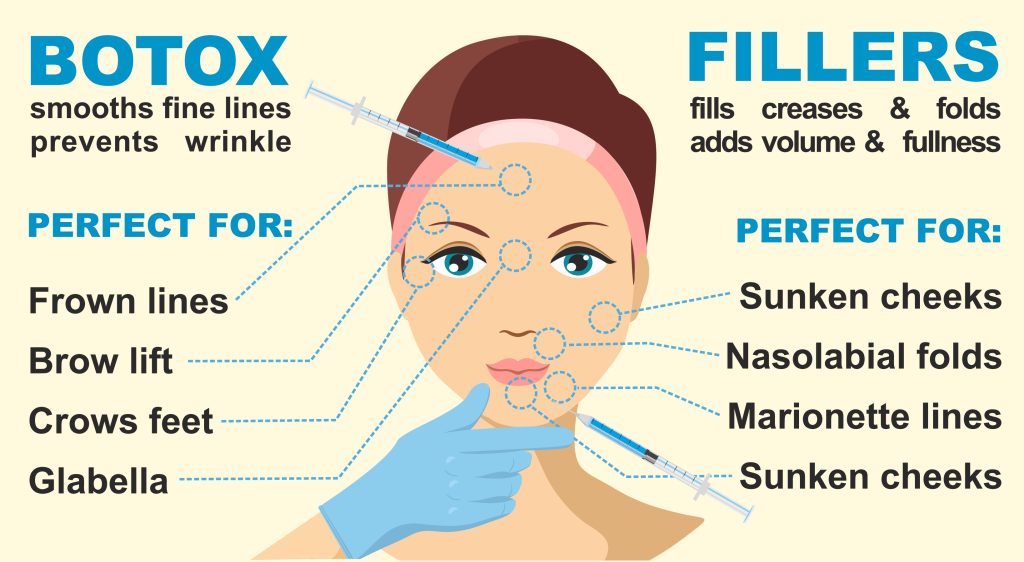
Nowadays, many celebrities are turning to both fillers and Botox to enhance their features and keep their skin looking young. However, what are the differences between botox and fillers?
How do you choose between them? It can sometimes be challenging and confusing because of the wealth of information online when it comes to botox and fillers.
If you're wondering which one of these popular cosmetic procedures is the best for you, the answer might be – doing both concurrently. After all, botox and filler treatments are actually very different with little to no overlap in terms of their aesthetic benefits. In fact, when injected in a targeted area, both treatments produce very specific effects.
For example, forehead botox helps to improve forehead lines and wrinkles whereas forehead fillers help to smoothen out and enhance the contour of the forehead.
Find out in this article what each procedure entails and how they can help beautify your features and improve your appearance.
Botox (botulinum toxin) is an injectable treatment that improves wrinkles and fine lines by reducing the activity of the facial muscles. Muscular activity is reduced by inhibiting the transmission of impulses along the facial nerves. Botox can also give a slimming effect when injected into the jaw, shoulders, or calves.
Fillers (also known as injectables or injectable fillers) are substances that are injected into the skin to give volume to enhance facial features, fill up creases, skinfolds as well as areas that are hollow or sunke. There are many different types of fillers, with hyaluronic acid (HA) and poly caprolactone (PCL) fillers being the most common and popular types in Singapore.
Hyaluronic Acid (HA) Fillers: This is a popular filler because it is very versatile and can be injected in almost all the areas of the face, even delicate areas such as the undereye tear trough or lips. Different “hardness” of hyaluronic acid fillers can even be injected together for best results. Side effects may include minor bruising, swelling, and redness.
Poly Caprolactone (PCL) Fillers: PCL fillers such as Ellanse have recently gained popularity because it has an added benefit of stimulating collagen when compared to HA fillers. Hence, Ellanse can not only volumise the face, it can help with anti aging by simtulating collagen in the injected area.
How does Botox work?
Botox is a neurotoxin that works by impairing the conduction of nerve signals in the facial muscles. This decreases the activity of the underlying facial muscles. Simply put, lesser muscular contractions equate to lesser wrinkles.
Regardless of the type of fillers, they work by occupying space, thereby giving a volumnising effect.
For example, chin fillers help to augment and enhance the appearance of the chin by adding volume to create a longer or more projected chin.
The famous “apple cheeks” can be achieved by injected fillers into the cheeks to increase its
volume, thereby enhancing the appearance of the cheek bones for the sought after apple cheeks.

The main benefit of botox is to improve the appearance of facial wrinkles. Common areas of
wrinkles that are targeted include forehead wrinkles, frown lines and wrinkles around the eyes.
Botox can also be used for jaw slimming for a more V shaped face, should contouring as well as
slimming of bulky calf muscles.
In rare cases, Botox can also help to relieve muscle spasms such as eyelid twitching.
Fillers on the other hand, are not very useful for wrinkles. They are injections that are used to improve the appearance of facial features.
Forehead filler for a smoother, rounder, fuller forehead
Temple fillers for those with sunken temples either due to weight loss or aging
Cheek fillers to achieve the sought after “apple cheeks” or to enhance the definition of the cheek bone for the “high cheekbone model look”
Nasolabial fold (laughline) fillers for those with sagging cheeks that lead to the formation of deep laughline creases on the sides of the nose
Nose Fillers for a higher, sharper nose
Chin Fillers for a longer, more defined chin
Types of Botox brands available in Singapore include Botox, Dysport and Xeomin.
Some of the most popular filler brands include: Juvederm, Restylane, Belotero and Teosyal.
It is important to choose the correct “hardness” of filler for specific areas. For example, a chin filler should be “hard” whereas a lip fillers should be “soft”. Injecting a soft filler in the chin would cause poor results and injecting a hard filler into the lips would lead to the formation of lumps which is not ideal.
All the different brands of botox and fillers have their own advantages and disadvantages.
An experienced doctor will be able to advise you on which brand of botox or fillers is ideal for your skin type, and which would be best in helping to address your primary concerns to achieve your desired resul
Botox is a popular treatment for facial wrinkles and is commonly used to help treat crow's feet (wrinkles around the eyes). Read on to learn what Botox treatments can do for crow's feet wrinkles and how the treatment works.
Crow's feet refer to the wrinkles and lines that radiate outwards from the corner of the eyes. These wrinkles can be accentuated when smiling or laughing. Wrinkles can be caused by repetitive movement (someone who smiles and laughs a lot), loss of collagen and elastin during the aging process, sun damage, smoking and genetic factors.
Botox injections help to improve the appearance of crow's feet by reducing muscle tension and movement of the orbicularis oculi muscle which is a muscle around the eye. Less muscle contractions leads to the improvement of wrinkles and fine lines.
There are a few things you should know before scheduling your Botox treatment:

Botox is a popular injectable treatment for wrinkles and lines around the face. Crow's feet are a common type of facial wrinkles, and Botox can be both safe and effective in improving their appearance. Here are some tips on how to use Botox for crow's feet:
1. Consult with a doctor before using Botox for crow's feet wrinkle treatment. Your doctor will recommend an ideal botox treatment plan for you depending on the severity of wrinkles. Be sure to discuss your options with your doctor!
2. Examine the area you want to treat before using Botox. Make sure that the area is clean and free of any oils or cosmetics. This will help ensure that the Botox will work optimally.
3. If it is your first time, choose to inject a lower, more natural dose first. Additional botox can be easily injected but if too much botox is given, it is difficult to remove.
4. Botox for the crow’s feet can be combined with botox for other areas such as the forehead or frown lines.
Crow's feet can be a frustrating problem to deal with, but Botox can help. Here are some tips on what to look out for after your Botox treatment:
Botox for crow's feet can be a very safe and effective treatment. However, it may have some associated side effects
1) Patient may experience discomfort during the injections. Pain is mild and feels like small ant bites.
2) Swelling after botox at the injection site is normal and looks like small mosquito bites. These swellings usually disappear in 4 to 6 hours.
3) Bruises. These are relatively uncommon, however, there are many small blood vessels near the eye which increases the risk of small bruises after treatment. Bruises are temporary and would usually disappear after 5 to 7 days
Masseter botulinum toxin may be considered by patients who experience jaw clenching, teeth grinding, bruxism, jaw muscle tightness or jaw tension related to overactive masseter muscles. The masseter muscles are the main chewing muscles located at the sides of the jaw. When these muscles are repeatedly activated from clenching or grinding, they may become stronger, tighter and more prominent over time.
For some patients, this overactivity may also contribute to a broader or more square-looking lower face. In suitable patients, masseter botulinum toxin may help reduce excessive jaw muscle activity, clenching force and jaw tension. Where enlarged masseter muscles also contribute to lower face width, treatment may gradually soften a square jawline and support a slimmer lower face shape over time.
This article explains common reasons patients consider masseter botulinum toxin, especially when functional concerns such as jaw clenching, teeth grinding, bruxism or jaw tension overlap with aesthetic concerns such as a broad lower face or square jawline.
For a complete guide to jaw slimming botulinum toxin treatment in Singapore, including suitability, dosage, results, side effects and cost, you may read more here:
https://botoxsingapore.sg/jaw-botox-singapore/

Jaw clenching and teeth grinding can repeatedly activate the masseter muscles, which are the main chewing muscles located at the sides of the jaw. Over time, this may cause the jaw muscles to become tighter, stronger or more prominent.
In some patients, masseter overactivity may contribute to jaw tension, morning jaw discomfort, teeth grinding symptoms and a broader-looking lower face. This is why masseter botulinum toxin may be considered when functional concerns such as clenching or bruxism overlap with aesthetic concerns such as jaw slimming or a square lower face.
One reason patients may consider masseter botulinum toxin is frequent teeth grinding, jaw clenching or bruxism. These habits can repeatedly activate the masseter muscles, causing them to become stronger, tighter and more overactive over time.
For some patients, this may lead to jaw muscle tension, morning jaw discomfort, tooth wear, headaches or a broader-looking lower face. Masseter botulinum toxin may be considered when the concern is related to excessive jaw muscle activity, although dental or specialist assessment may still be needed if there are significant teeth, bite or jaw joint issues.
Teeth grinding, also known as bruxism, may happen during sleep or while awake. Some patients may not realise they are grinding their teeth until they notice symptoms such as jaw tightness, worn teeth, morning facial tension, jaw soreness or comments from a dentist.
When teeth grinding repeatedly activates the masseter muscles, the jaw muscles may become more prominent over time. This can contribute to both functional discomfort and a wider or more square-looking lower face in suitable patients.
Botulinum toxin works by reducing the strength of muscle contraction. When injected into the masseter muscles, it may help reduce excessive clenching force and jaw muscle overactivity in suitable patients.
This does not remove the habit or underlying cause of bruxism itself. Instead, it may reduce how strongly the masseter muscles contract. Some patients may notice less jaw tightness, less muscle tension or reduced clenching-related discomfort over time.
Teeth grinding and jaw clenching can have several possible causes, including stress, sleep-related factors, bite issues, dental problems or temporomandibular joint concerns. Masseter botulinum toxin may help reduce muscle overactivity in suitable patients, but it does not replace dental assessment when there are significant dental or jaw joint symptoms.
Patients with tooth wear, jaw joint pain, clicking, locking, bite changes, persistent headaches or dental pain should consider assessment by a dentist or relevant specialist. In some cases, a night guard, dental review or combined approach may be recommended.
One reason patients may consider masseter botulinum toxin is persistent jaw muscle tightness, facial tension or a feeling that the jaw is constantly overworked. This may happen when the masseter muscles are repeatedly activated through clenching, grinding or holding tension in the lower face.
When the masseter muscles are overactive, patients may notice tightness at the sides of the jaw, jaw fatigue after chewing, or discomfort when waking up in the morning. These symptoms may overlap with teeth grinding, bruxism or habitual jaw clenching.
Some patients notice jaw tightness or facial tension when they wake up. This may suggest that clenching or teeth grinding is happening during sleep, especially if the masseter muscles feel sore, heavy or tired in the morning.
In suitable patients, masseter botulinum toxin may help reduce excessive jaw muscle activity and clenching force. This may reduce the intensity of muscle tension related to overactive masseter muscles, although patients with persistent pain or dental symptoms may still need dental or specialist assessment.
Jaw fatigue may occur when the masseter muscles are repeatedly overused. Some patients notice tiredness at the sides of the jaw after eating tougher foods, chewing for long periods, or clenching unconsciously during the day.
If the jaw muscles are enlarged or overactive, reducing masseter muscle activity may help decrease excessive strain on the chewing muscles. However, the treatment should be planned carefully to avoid excessive chewing weakness.
Jaw muscle tension may suggest masseter overactivity when the muscles feel firm, bulky or tender at the sides of the jaw, especially during clenching. Patients may also notice that the lower face appears wider when they bite down.
Masseter botulinum toxin may be considered when these symptoms are related to enlarged or overactive masseter muscles. A proper assessment is important to distinguish masseter muscle tension from jaw joint problems, dental issues, bite-related concerns or other causes of facial pain.
Some patients consider masseter botulinum toxin because their lower face appears broader, heavier or more square-shaped when they clench their jaw. This may happen when the masseter muscles are enlarged or overactive, causing the sides of the jaw to become more prominent during biting or clenching.
A square lower face is not always caused by enlarged masseter muscles. It may also be related to jawbone structure, facial fat, skin laxity or jowling. However, if the jawline looks noticeably wider when clenching, this may suggest that the masseter muscles are contributing to the lower face width.
A simple way to identify possible masseter enlargement is to place the fingers gently along the sides of the jaw and bite down. If the muscles become firm, bulky or prominent when clenching, the masseter muscles may be contributing to the square or wide appearance of the lower face.
This does not replace a proper medical assessment, but it can help patients understand why their lower face may look wider when they clench. During consultation, the masseter muscles can be assessed more accurately in relation to facial shape, jawbone structure, skin support and treatment goals.
A square jawline may be muscle-related when the width is mainly caused by enlarged masseter muscles rather than bone structure or facial fat. This is often more obvious from the front view, especially when the patient bites down or clenches.
In suitable patients, masseter botulinum toxin may help reduce excessive muscle activity over time. As the masseter muscles become less active, the lower face may gradually appear softer, slimmer and less square.
Jaw slimming with masseter botulinum toxin is usually gradual. The treatment does not immediately remove muscle bulk. Instead, it relaxes the masseter muscles so that they contract less strongly over time.
Some patients may first notice reduced jaw tension or clenching strength before visible facial slimming becomes obvious. The lower face may then gradually appear less bulky as the treated masseter muscles become less active.
Some patients consider masseter botulinum toxin because they have both functional and aesthetic concerns. For example, they may experience jaw clenching, teeth grinding or jaw muscle tension, while also noticing that their lower face appears wider, bulkier or more square-shaped.
This overlap can happen because the masseter muscles are involved in both jaw function and lower face shape. When these muscles are overactive or enlarged, they may contribute to clenching-related symptoms as well as muscle-related jaw width.
Patients who clench their jaw frequently may notice that the masseter muscles feel firm, tight or prominent. Over time, repeated clenching may cause the jaw muscles to become stronger or bulkier, which can make the lower face appear broader from the front view.
In suitable patients, masseter botulinum toxin may help reduce excessive jaw muscle activity while also gradually softening the appearance of a square lower face.
Teeth grinding can repeatedly activate the masseter muscles, especially if it happens during sleep. Some patients may notice morning jaw tightness, facial tension, tooth wear or jaw muscle fatigue, while also developing more prominent jaw muscles over time.
Masseter botulinum toxin may be considered when teeth grinding is associated with overactive or enlarged masseter muscles. However, patients with significant tooth wear, jaw joint symptoms, bite issues or dental pain may still need dental or specialist assessment.
When both functional and aesthetic concerns are present, treatment planning should be customised carefully. A patient seeking relief from clenching symptoms may require a different approach from a patient mainly seeking jaw slimming.
The goal is to reduce excessive masseter muscle activity while preserving chewing function, natural facial movement and lower face balance. Over-treating the masseter muscles may increase the risk of chewing weakness, facial imbalance or excessive jaw slimming in unsuitable patients.
Some patients consider masseter botulinum toxin because they prefer a non-surgical option when their wider or more square-looking lower face is mainly caused by enlarged masseter muscles. Unlike surgical jaw reduction, masseter botulinum toxin does not cut the jawbone, remove bone or permanently change the facial skeleton.
Instead, botulinum toxin works by reducing excessive masseter muscle activity. In suitable patients, this may gradually soften muscle-related lower face width while preserving a natural-looking facial shape.
Masseter botulinum toxin targets muscle activity rather than bone structure. It is most relevant when a square or wide lower face is caused mainly by enlarged or overactive masseter muscles.
If the jawline is wide mainly because of jawbone structure, the slimming effect may be more limited. This is why assessment is important before deciding whether the concern is mainly muscular, bony, fatty or related to skin laxity.
The goal should not be to make the jawline as slim as possible. Over-slimming may not suit every patient, especially if there is existing facial volume loss, early jowling, skin laxity or a naturally narrow lower face.
A balanced approach aims to reduce excessive muscle-related width while preserving chewing function, natural facial movement and lower face support.

Masseter botulinum toxin may be useful when jaw clenching, teeth grinding or a square lower face is mainly related to overactive or enlarged masseter muscles. However, it may not be enough if the symptoms are caused by jaw joint problems, dental issues, bite-related concerns, facial fat, bone structure, jowling or skin laxity.
Understanding these limitations is important because not every case of jaw pain, teeth grinding or lower face widening is caused by the masseter muscles alone. In some patients, a dental review, specialist assessment or a different aesthetic treatment approach may be more suitable.
Jaw pain may sometimes come from the temporomandibular joint, also known as the jaw joint, rather than the masseter muscles alone. Patients with jaw clicking, locking, limited mouth opening, bite changes or persistent joint pain may need further assessment.
Masseter botulinum toxin may help reduce excessive jaw muscle activity in suitable patients, but it does not directly treat all jaw joint problems. If the main issue is joint-related, a dentist or relevant specialist may need to assess the underlying cause.
Teeth grinding and jaw clenching can be related to several factors, including stress, sleep habits, dental problems, bite issues or jaw joint concerns. Masseter botulinum toxin may help reduce the strength of masseter muscle contraction, but it may not address the underlying dental or bite-related trigger.
Patients with significant tooth wear, cracked teeth, dental pain, bite changes or jaw joint symptoms may need dental assessment. In some cases, a night guard, bite review or combined treatment approach may be recommended.
A broad or square lower face is not always caused by enlarged masseter muscles. Some patients naturally have a wider jawbone, while others may have lower face fullness due to facial fat.
Masseter botulinum toxin does not change the jawbone or remove facial fat. If lower face width is mainly due to bone structure or facial fat, jaw slimming with masseter botulinum toxin may have a more limited effect. A proper facial assessment helps determine whether the concern is muscular, bony, fatty or related to skin laxity.
If the main concern is jowling, lower face sagging or reduced jawline definition, masseter botulinum toxin may not be the most suitable first option. In some patients, reducing masseter bulk too much may even make existing lower face laxity more noticeable.
For patients whose main concern is skin laxity, mild sagging or lower face firmness, you may read more about Ultraformer MPT HIFU treatment in Singapore here:
https://botoxsingapore.sg/ultraformer-mpt-hifu-guide-singapore/
If the concern is neck bands, lower face pull or jawline definition rather than masseter bulk, you may read more about jawline and neck lift botulinum toxin treatment here:
https://botoxsingapore.sg/neck-lift-jawline-botox-singapore/

Masseter botulinum toxin is most relevant when jaw clenching, teeth grinding or lower face width is mainly related to enlarged or overactive masseter muscles. However, some patients may have other lower face concerns that require a different treatment approach, especially if the issue is related to chin projection, facial volume, jawline definition, sagging or skin laxity.
Identifying the main cause of the concern helps avoid treating the wrong area. This is important because jaw slimming, jawline lifting, fillers and skin tightening treatments work in different ways and are used for different lower face concerns.
Some patients may feel that their lower face looks wide or unbalanced because of chin shape, chin projection or lower face proportion rather than masseter muscle bulk. A weaker or shorter-looking chin can sometimes make the jawline appear less tapered or make the lower face look less balanced.
In these cases, masseter botulinum toxin may not be the main treatment required. If the concern is related to chin proportion rather than jaw muscle overactivity, chin fillers may sometimes be considered as part of a lower face balancing approach.
You may read more about chin fillers here:
https://botoxsingapore.sg/chin-fillers-singapore/
Some patients are more concerned about jawline definition, facial support or contour rather than jaw muscle tightness or clenching. In these cases, the lower face may look less defined because of facial volume changes, chin projection, jawline structure or soft tissue support.
Dermal fillers may sometimes be considered when the goal is to improve structural support, contour or definition rather than reduce masseter muscle activity. This is different from masseter botulinum toxin, which targets overactive jaw muscles rather than replacing facial volume.
You may read more about dermal face fillers here:
https://botoxsingapore.sg/dermal-face-fillers-singapore/
If the main concern is jowling, mild sagging or loose skin around the lower face, masseter botulinum toxin may not be the most suitable first treatment. These concerns are usually related to skin laxity, collagen changes, facial support or ageing-related tissue descent rather than enlarged masseter muscles.
For patients whose main concern is skin laxity, firmness or mild sagging, treatments that focus on lifting and tightening may be more appropriate.
You may read more about Ultraformer MPT HIFU treatment in Singapore here:
https://botoxsingapore.sg/ultraformer-mpt-hifu-guide-singapore/
Some patients notice lower face heaviness, neck bands or reduced jawline definition due to downward muscle pull from the lower face and neck. This is different from masseter enlargement, which mainly affects jaw width at the sides of the lower face.
If the concern is related to neck bands, lower face pull or jawline definition rather than masseter muscle bulk, jawline and neck lift botulinum toxin treatment may be more relevant.
You may read more about jawline and neck lift botulinum toxin treatment here:
https://botoxsingapore.sg/neck-lift-jawline-botox-singapore/

This article focuses on reasons patients may consider masseter botulinum toxin when jaw clenching, teeth grinding, bruxism, jaw tension or jaw muscle tightness overlap with a broader or more square-looking lower face.
For patients who are looking for a more complete treatment guide covering suitability, dosage, injection process, results timeline, duration, side effects, jowling risks, cost and frequently asked questions, you may read our main jaw slimming botulinum toxin guide here:
https://botoxsingapore.sg/jaw-botox-singapore/
A consultation can help determine whether your symptoms are mainly related to overactive masseter muscles, dental or bite-related issues, jaw joint problems, jawbone structure, facial fat, skin laxity or a combination of factors. This allows the treatment plan to be customised according to your jaw muscle strength, clenching habits, facial proportions and treatment goals.
Patients considering masseter botulinum toxin often want to know whether it can help with jaw clenching, teeth grinding, bruxism, jaw tension or a wider-looking lower face. The answers below explain common functional and aesthetic questions, while keeping this article focused on symptom-led decision-making rather than replacing a full treatment consultation.
Can Masseter Botulinum Toxin Help With Jaw Clenching?
Masseter botulinum toxin may help reduce excessive jaw muscle activity in suitable patients with jaw clenching. Botox works by reducing the strength of masseter muscle contraction, which may help reduce clenching force, jaw tightness and muscle-related tension.
However, jaw clenching can have several causes, including stress, sleep habits, dental issues, bite-related concerns or jaw joint problems. A proper assessment is important before deciding whether masseter botulinum toxin is suitable.
Can Masseter Botulinum Toxin Help With Teeth Grinding?
Masseter botulinum toxin may be considered for patients with teeth grinding or bruxism when the concern is related to overactive masseter muscles. By reducing the strength of muscle contraction, Botox may help reduce the intensity of grinding-related jaw muscle activity in suitable patients.
It does not remove the habit or underlying cause of teeth grinding itself. Patients with significant tooth wear, cracked teeth, dental pain, bite changes or jaw joint symptoms may still need dental assessment.
Can Jaw Clenching Make The Face Look Wider?
Yes, jaw clenching may contribute to a wider-looking lower face in some patients. Repeated clenching can cause the masseter muscles to become stronger, tighter or more bulky over time. When these muscles enlarge, they may add width to the sides of the jaw and make the lower face look broader or more square.
However, a wide lower face can also be caused by jawbone structure, facial fat, jowling or skin laxity. Assessment is needed to determine the main cause.
How Do I Know If My Masseter Muscles Are Enlarged?
One possible sign of enlarged masseter muscles is when the sides of the jaw become firm or prominent when you clench or bite down. Some patients may also notice jaw tightness, jaw fatigue, teeth grinding, or a square-looking lower face from the front view.
This self-check is not a diagnosis. A proper consultation helps assess masseter muscle size, muscle strength, bite pattern, facial proportions and whether the lower face width is mainly muscle-related.
Will Masseter Botulinum Toxin Slim My Jawline?
Masseter botulinum toxin may help slim the jawline if the lower face width is mainly caused by enlarged masseter muscles. As the treated muscles become less active, the lower face may gradually appear softer, slimmer and less square in suitable patients.
If the jawline is wide mainly because of bone structure, facial fat, jowling or skin laxity, Botox may have a more limited slimming effect.
Is Masseter Botulinum Toxin A Dental Treatment?
Masseter botulinum toxin is not a dental treatment. It is a medical injectable treatment that targets the masseter muscles. It may help reduce excessive jaw muscle activity in suitable patients, but it does not replace dental assessment when teeth, bite or jaw joint issues are present.
Patients with significant tooth wear, dental pain, bite problems, jaw joint clicking, jaw locking or persistent headaches may still need assessment by a dentist or relevant specialist.
Should I See A Dentist For Bruxism?
Patients with bruxism may benefit from seeing a dentist, especially if there is tooth wear, cracked teeth, jaw joint pain, bite changes, headaches or dental discomfort. Bruxism can involve both muscle activity and dental or bite-related factors.
Masseter botulinum toxin may help reduce excessive masseter muscle contraction in suitable patients, but a combined approach may be needed if dental protection, night guards or bite assessment are required.
Can Masseter Botulinum Toxin Help With Jaw Pain?
Masseter botulinum toxin may help with jaw discomfort if the pain is mainly related to overactive or tense masseter muscles. By reducing excessive muscle contraction, Botox may help reduce muscle-related jaw tension in suitable patients.
However, jaw pain can also come from the jaw joint, teeth, bite issues, inflammation or other causes. Persistent, severe or worsening jaw pain should be assessed appropriately before treatment.
Can This Treatment Be Used For Both Jaw Slimming And Clenching?
Yes, in suitable patients, masseter botulinum toxin may be considered for both jaw slimming and jaw clenching. This is because the masseter muscles can contribute to both jaw muscle overactivity and lower face width.
However, the treatment plan should be customised carefully. Patients mainly concerned about clenching may require a different approach from patients mainly seeking jaw slimming. The goal is to reduce excessive masseter activity while preserving chewing function and natural facial balance.
Is Bruxism The Same As Jaw Clenching Or Teeth Grinding?
Bruxism refers to repeated teeth grinding or jaw clenching, which may happen during sleep or while awake. Some patients notice jaw tightness, tooth wear, morning facial tension or enlarged masseter muscles over time.
Masseter botulinum toxin may help reduce excessive masseter muscle activity in suitable patients, but bruxism can have several causes. Dental assessment may still be needed if there is tooth wear, jaw joint pain, bite issues or persistent headaches.
Where Can I Learn More About Jaw Slimming Treatment In Singapore?
For a more detailed guide covering suitability, dosage, injection process, results timeline, side effects, jowling risks, cost and treatment FAQs, you may read our main jaw slimming botulinum toxin treatment guide here:
https://botoxsingapore.sg/jaw-botox-singapore/
Have you ever considered getting botox for your frown lines? It sounds like a great idea, right? However, it's important to understand how the treatment works as well as the limitations around botox. In addition, what are the side effects of using this type of treatment?
Botox is a neurotoxin that blocks neuromuscular transmission. It is most commonly used to treat frown lines, crow's feet, and wrinkles around the eyes.

Botox is injected into the muscles that are responsible for the creation of lines and wrinkles.
Muscular contractions pull on the skin, creating wrinkles. Botox works by temporarily paralyzing. muscles so they contract less. Lesser muscular contractions translates to less skin movement, thereby improving the appearance of wrinkles.
Side effects of Botox can vary depending on which muscle it is injected into and how much was injected. Common side effects include mild headache, bruising, swelling, and discomfort during injections.
Botox has been used for decades to treat wrinkles and studies have shown that it is a safe and effective treatment.
In the hands of an experienced injector, Botox is able to deliver beautiful, natural results with minimal risks.
Botox is a type of injectable medicine that is used to treat wrinkles and lines around the mouth, eyes, forehead, and nose. Botox can be used to improve wrinkles in these areas of skin without any need for invasive surgical treatments. There are different brands of botox in the market such as dysport, xeomin, neuronox and botulax. It is important to discuss with your doctor about your preference as there are some minor differences between the difference brands.
Botox injections can be a great way to improve the appearance of frown lines. Botox relaxes muscles and reduces wrinkles by temporarily weakening muscular contractions. This treatment is most often used on the forehead, between the eyebrows, around the eyes and along the sides of the nose. However, it can also be used on other areas of the face where wrinkles are present.
If you are considering botox for frown lines, be sure to consult with your doctor first. Botox can have some adverse effects, like muscle weakness or drooping eyelids, so it is important to discuss your goals and expectations with him or her before beginning treatment.
Botox for frown lines is a popular treatment option, but how long does it last? A frown line treatment with botox will typically last around four to six months, depending on the dosage of botox injected.
Results vary between patients even if the same dose is used because botox sensitivity will differ between individuals.
Generally speaking, the higher the dose, the longer-lasting the results. However, high doses may lead to a “Frozen” appearance as there is minimal facial movement. Patients should discuss with their doctor whether they prefer a natural look or a frozen look.
Botox is a popular and effective treatment for frown lines. The pros of Botox for frown lines include that it is fast-acting, safe, effective and affordable.
The cons of Botox for frown lines include that there may be slight discomfort during the injection and it has to be maintained once every 4 to 6 months for best results.
Botox is a minimally invasive cosmetic treatment that improves the appearance of wrinkles by reducing facial muscle contractions. Botox for the forehead can help eliminate wrinkles caused by the forehead frontalis muscles and its repetitive movement. Botox is considered a safe and effective treatment for wrinkles. However, rarely, there may be some undesirable side effects. Find out more about what these side effects are in this article!

There are a few methods that can be used to help improve wrinkles on your forehead. The first is to use a collagen-stimulating topical cream or serum containing ingredients such as Vitamin C, Peptides, or Retinol. This will help to soften the skin and reduce the appearance of wrinkles.
Skin hydration is another crucial factor. Dry skin tends to form fine lines and wrinkles more easily. Ensure that your skin is well hydrated by using hydrating serums with high concentrations of hyaluronic acid as well as rich moisturizing creams.
It is also important to minimize UV radiation (sun) exposure when trying to improve wrinkles in general. UV exposure is linked to premature aging as well as higher risks of skin cancer.
Forehead wrinkles are a common problem that many people experience as they age.
As we age, the skin loses collagen and elastin, causing the skin on your forehead to sag and creating wrinkles. You can combat this by using a retinol cream or serum every day. These topical solutions help to increase collagen production and reduce the appearance of wrinkles. Other type of collagen boosting medical treatments include Rejuran Healer, Profhilo and HIFU.
The loss of collagen and elastin means that repetitive muscular contractions of the forehead muscles over the years lead directly to wrinkle formation. Botox addresses this problem by relaxing the forehead muscles, thereby reducing muscular contraction and movement of the forehead skin, leading to an improvement of forehead wrinkles.
One of the most popular ways to get rid of wrinkles on your forehead is with a botox treatment. Botox is a medication that relaxes the muscles in the face. This usually results in fewer wrinkles appearing on your face and forehead.
To get a botox treatment, you will need to visit a doctor who is specially trained in this area. An experienced botox injector will be able to advise you on the dosage amount of botox needed and if botox is suitable for your anti aging needs and concerns.
Botox injections can be done in several different areas of the face, including the forehead., frown lines and eye area. During the injection, your doctor will use a fine needle to inject the botox into the muscle that is causing the wrinkles. The injections feel like small ant bites and take only a few minutes. Afterward, you can largely resume your daily activities with some small restrictions on the day of treatment.
Botox, also known as botulinum toxin, is a medicine used to treat wrinkles and other areas of the face. It is a safe and effective treatment that has many benefits.
One of the most important benefits of the botox treatment is that it can help to reduce wrinkles on the forehead and face. Botox works by blocking the transmission of signals along the nerves to the muscle. This way, muscular contractions are reduces, helping to make wrinkles less visible and giving the skin a smoother appearance.
Another benefit of the botox treatment is that it can improve the appearance of wrinkles around the eyes. Botox can also reduce frown lines as well as small wrinkles around the lips, which can make them look younger and more attractive.
Overall, the botox treatment is a safe and effective way to reduce wrinkles for the forehead and other areas of the face. It has many benefits that make it worth considering for those seeking an improvement in their appearance.
One of the most common procedures used to treat wrinkles is Botox injections. However, these injections can have side effects that you may not be aware of. Some of the side effects of Botox treatments include:
• Swelling and Bruising: Swelling may occur after Botox injection treatments. This swelling usually goes down within a few days, but you may experience discomfort for a few weeks after the treatment. If you experience significant swelling, tell your doctor right away.
• Eyebrow and Eyelid drooping: In rare cases, Botox injections given too close to the eyebrows can lead to the drooping of the eyebrow and / or eyelid. This typically goes away within a few weeks following the treatment. An experienced injector will know the safe zones of the forehead to inject botox in order to avoid such side effects.
One common cause of wrinkles on the forehead is age. As we get older, our skin thinning process causes more wrinkles in our forehead. It's especially noticeable in men and women over the age of 45 years old.
Although there is no surefire way to prevent wrinkles on the forehead, there are certain habits that can help to minimize their appearance. For example, avoiding exposure to sunlight and using face cream or moisturizers can help to keep your skin healthy and wrinkle-free.
In this article, we have discussed a few methods for improving wrinkles on your forehead without resorting to expensive or dangerous treatments. Try out one or more of these tips and see if they help to diminish the visible aging signs on your forehead!
Aging doesn't happen overnight. We all know people who despite the passage of years, still look and act like they were much younger than they are. What's been the main cause of this? Well, whatever it is that those people do, many of us just can't seem to achieve it ourselves. Non-surgical methods make you look and feel younger thanks to their numerous benefits such as bettering physical appearance, improving face tone, and reducing wrinkles without direct injection into the skin. By using science in a way that gets around any potential risks involved with traditional plastic surgery, these procedures are becoming more commonplace than ever before!
In this article, Dr Edwin goes into detail on where to find the line between natural and unrealistic,including botox for wrinkles such as frown lines. Find out more about the ins and outs of choosing a treatment that works for you!

Non-surgical solutions can help reduce wrinkles and age spots. In addition to over-the-counter creams, botanical wrinkle reducers, special glasses, and sunscreen products can also help diminish the appearance of wrinkles, sunspots, and other signs of aging.
Nonsurgical solutions to facelift and age spots are becoming more popular every day. By following doctor-approved methods, you can avoid surgery while still looking younger. Regular skincare, multivitamins, and healthy eating habits are all essential for looking your best.
One of the most popular nonsurgical options is a pigmentation laser treatment. This treatment uses a noninvasive laser treatment to target pigment cells. This results in a smoother, younger skin that is brighter, more glowing and free of pigmentation.
Other nonsurgical solutions for anti-aging include Microdermabrasion and High Intensity Focused Ultrasound (HIFU). With Microdermabrasion medical facials, the top layer of dead skin is exfoliated and serums rich in anti-aging ingredients are infused into the skin to boost collagen production and skin hydration.
HIFU treatments using the Ultraformer 3 HIFU machine uses precise medical-grade ultrasound energy for non-surgical face lifting and skin tightening. The Ultraformer III HIFU is a 3rd generation HIFU machine offering higher power, lesser discomfort, increased safety, and clinically proven results.
These treatments are not just for the face; they can be used on any area of the body that needs improvement.
With advances in medical technology, non-surgical solutions are often used treat wrinkles and reduce frown lines on a person's face. One non-surgical option for the improvement of frown lines is Botox injections. These injections work by relaxing the muscles that form wrinkles in the face. On average, Botox injections may need to be repeated once every 4 to 6 months for optimal results.
Another non-surgical anti aging solution is fillers. These fillers are placed in specific areas of the face to create a more youthful appearance and address volume deficient parts of the face. Fillers can last anywhere from nine months to two years, depending on the type of filler and amount used.
Either method has minimal downtime following the procedure and both are generally considered safe and effective.
Who Is A Candidate For Cosmetic Procedures?
What Are The Types of Cosmetic Procedures?
What Are The Risks Associated With Cosmetic Procedures?
A cosmetic procedure can make you look younger, more beautiful, and more confident. However, before considering a procedure, be sure to ask your doctor if it's a good option for you. There are many types of cosmetic procedures, each with its own benefits and risks. Some common procedures include Rejuran, Skinboosters, HIFU, Threadlifts, Lasers, Fillers and Botox injections. Before agreeing to any procedure, be sure to discuss all the options with your doctor.
There may be several risks associated with certain cosmetic procedures. These may include swelling, bruising, infection or scarring. Multiple treatments may also be required to achieve your desired results. Some may require long term maintenance such as yearly HIFU treatments for example to keep collagen levels in the skin as high as possible.
Botox for crow's feet is an ideal treatment for the aging skin with wrinkles around the eyes. The procedure is safe, effective, and results in a more refreshed and rejuvenated appearance. The procedure takes between 10 to 15 minutes and has minimal discomfort or downtime. The onset of Botox results for crow's feet should be apparent after 3 to 10 days.
The number of botox units used to treat crow's feet varies on the severity and distribution of wrinkles around the eyes. The dosage of botox also impacts duration and longevity of botox results. Usually, Dr Edwin recommends injecting between 6 to 12 units of botox per eye. Results may last around three to four months. In the hands of an experienced injector, this procedure has high levels of safety and efficacy.
When considering Botox for crow's feet, you should be aware of the costs involved. The cost depends on the amount of botox required. Generally, twelve to twenty-four units in total for both eyes are needed which averages between $200 to $400 for the treatment. If you're planning on having this treatment, it's recommended that you consult with a skilled healthcare provider before deciding on the procedure.
After botox, there may be small bumps or swellings at the injection sites. These bumps contain the injected botox and will automatically diffuse into the skin. Usually, these bumps will subside after 4 to 6 hours. Hence, downtime is usually minimal.
Post treatment, patients can wash their faces, apply skincare, and resume normal activities the next day. However, they are advised to avoid facial massages, strenuous exercises or applying direct pressure over the botox injection area for 1 day.
While Botox injections are very safe, they are not appropriate for everyone. They are not suitable for people with skin conditions or neuromuscular disorders. If you have any of these conditions, you should discuss the treatment with your doctor before choosing a botox treatment.
While Botox has been used for more than a century, it has only recently become widely available. It is safe for most patients and has very minimal risks when administered by a medical professional. It will last about three to four months. Depending on the dosage and method of injection, Botox crow’s feet should not affect your ability to have facial expressions and will deliver completely natural results.
If you are looking for an effective treatment for crow's feet, you should go for an aesthetic doctor with a reputation for excellence. While some people are concerned about the side effects of Botox, they should remember that the procedure can be very effective. In addition, the process is painless, and the recovery time is minimal. Besides that, most patients report having a smoother, refreshed appearance after treatment.
Botox for crow's feet is both a safe and effective treatment that can reduce the appearance of the wrinkles around the eyes. This treatment is noninvasive with little to no downtime. After the procedure, patients can go about their daily lives with no inconvenience. They should avoid rubbing their eyes on the day of treatment and avoid lying flat on the face or going for facial massages.
Copyrights 2026 by Edwin Lim Medical Aesthetic Clinic Pte. Ltd.

