
Identifying Hormonal Acne
There is no single "look" for hormonal acne, but doctors often suspect it when breakouts:
Follow a Pattern: Predictably worsen before or during menstruation.
Occur in Specific Areas: Frequently appear around the chin, jawline, or lower face.
Are Persistent: Are deep, tender, nodular, or cystic, and resistant to standard acne treatments.
Appear with Other Signs: In some women, it may be linked to irregular periods, excessive hair growth, or thinning hair (though these are not required to have hormonal acne).
Why It Happens
Hormonal acne shares the same basic causes as regular acne (excess oil, blocked follicles, bacteria), but it is intensified by:
Increased Oil Production: High androgen levels (or sensitivity to them) overstimulate sebaceous glands, leading to more oil.
Blocked Pores: Excess oil traps dead skin cells, leading to clogged pores and inflammation.
Treatment Approaches
Because hormonal acne is complex, the page emphasizes that treatment should be personalized based on severity, medical history, and goals. Treatments often include:
Medical Skincare: Targeted topical treatments to unclog pores and manage oil.
Oral Medications: Options like antibiotics or isotretinoin (for severe or scarring cases).
Hormonal Therapies: Specific treatments for select female patients.
In-Clinic Procedures:
Acne facials for decongestion.
Pimple injections for rapid relief of large cysts.
Lasers to address inflammation, redness, and scarring.
Advice for Teenagers (and General Care)
The page also provides specific guidance for teens:
Consult a doctor early: Don’t wait if the acne is painful, scarring, or not improving with over-the-counter products.
Stop picking/squeezing: This forces inflammation deeper and increases the risk of permanent scarring.
Simplify: Avoid aggressive scrubs or frequently changing products, which can damage the skin barrier.

Hormonal acne does not have a single diagnostic appearance. A hormonal influence is more likely when breakouts recur in a recognisable pattern, flare during hormonal changes or repeatedly affect similar areas.
The pimples are often deeper, more inflamed and slower to settle than occasional mild breakouts. However, hormonal acne may occur alongside blackheads and whiteheads, and no single feature can confirm that a breakout is hormonally influenced.
Features that may suggest a hormonal influence include:
These features may suggest a hormonal contribution, but they do not necessarily indicate abnormal hormone levels or confirm an underlying condition such as PCOS. Recording the timing, location and severity of breakouts over several months may provide useful information during a medical assessment.
Recurrent chin and jawline acne is commonly associated with hormonal influences, particularly in adult women. A combination of lower-face breakouts and predictable menstrual flare-ups provides a stronger indication of hormonal involvement than either location or timing alone.
Adult female acne may persist from adolescence or begin for the first time during adulthood. It may present as recurring inflamed pimples, deeper cystic lesions or a combination of inflammatory acne, blackheads and whiteheads.
Other conditions and external factors can also affect the chin, jawline and area around the mouth. These include perioral dermatitis, folliculitis, friction and irritation from heavy or occlusive skincare products. The overall appearance, timing and recurrence pattern should therefore be considered.
Hormonal changes during puberty can increase oil-gland activity and contribute to acne in teenagers. Teenage acne may affect the face, chest, shoulders and back and often includes a combination of clogged pores and inflamed pimples. Persistent, painful or scarring acne should be assessed early rather than assumed to be a temporary part of puberty.
Men may also develop hormone-influenced acne, although it usually occurs without a clear cyclical pattern. Acne that begins suddenly, becomes unusually severe or worsens after starting testosterone treatment, anabolic steroids, bodybuilding supplements or another medication should be medically assessed.
Learn more about teenage acne treatment in Singapore here:
Hormonal acne develops through the same core processes involved in acne vulgaris: increased oil production, blocked hair follicles, inflammation and the activity of Cutibacterium acnes. Hormonal fluctuations or increased sensitivity to androgens may intensify these processes, making breakouts more persistent or likely to recur.
Androgens are hormones present in both women and men. They influence the activity of the sebaceous glands, which produce the skin’s natural oil, or sebum. Increased androgen activity or greater sensitivity of the sebaceous glands to these hormones may increase sebum production.
Excess oil can combine with dead skin cells inside a hair follicle and form a blocked pore. A closed blockage may develop into a whitehead, while an open blockage may appear as a blackhead. Cutibacterium acnes, which is naturally present within the follicles, and the skin’s inflammatory response may then contribute to red, swollen or deeper pimples.
Hormones are therefore one contributing factor rather than the sole cause of hormonal acne. This is why treatment may need to address several acne pathways, including excess oil, clogged pores, bacteria and inflammation.
Changes in hormonal activity may affect oil production, pore congestion and inflammation at different stages of life. Hormonal acne may begin or worsen during:
The pattern varies between individuals. Some women experience predictable menstrual flare-ups, while others develop persistent adult acne without a clear monthly pattern.
Polycystic ovary syndrome, or PCOS, is a hormonal and metabolic condition that may contribute to acne through increased androgen activity and its effects on the sebaceous glands. However, not every patient with PCOS develops acne, and most patients with hormonal acne do not necessarily have PCOS.
Acne alone cannot confirm PCOS. Further evaluation may be considered when acne occurs together with irregular or infrequent menstrual periods or other possible signs of androgen excess. Other hormonal causes are less common, but sudden severe acne or the rapid development of androgen-related symptoms should be medically assessed.
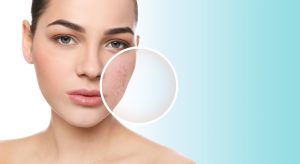
Hormonal acne is usually assessed clinically by considering the behaviour of the breakouts, associated symptoms and the patient’s medical history. No single appearance, distribution or laboratory result can confirm that acne is hormonally influenced.
During an assessment, the doctor may consider:
The skin should also be examined to distinguish acne from conditions that may resemble it, such as perioral dermatitis, folliculitis or irritation caused by skincare products.
Most patients with an otherwise typical pattern of hormonal acne do not require routine hormone blood tests. Normal circulating hormone levels also do not exclude a hormonal influence because the skin’s sebaceous glands may be more sensitive to androgen activity.
Further hormonal evaluation may be considered when acne occurs together with:
The need for testing and the choice and timing of blood tests depend on the overall clinical picture. Hormonal contraception and other medications may also affect the interpretation of certain results. Where appropriate, further assessment by a gynaecologist or endocrinologist may be recommended.
For many patients in Singapore, the concern extends beyond active hormonal acne to the persistent redness, pigmentation or scarring that may remain after the pimples settle. The type and visibility of these post-acne changes vary according to the depth of inflammation, skin tone and individual healing response.
Singapore’s warm and humid climate does not directly cause hormonal acne. However, perspiration, friction and prolonged occlusion may aggravate existing breakouts and affect which skincare products are comfortable and suitable for regular use.
Singapore’s climate may increase perspiration and make heavy or occlusive skincare products feel uncomfortable on acne-prone skin. Sweating alone does not cause hormonal acne, but prolonged moisture combined with repeated friction from masks, helmets, chin straps, sports equipment or tight clothing may aggravate acne affecting the face or body.
An appropriate skincare routine should control acne without excessively drying or irritating the skin. Gentle cleansing, a lightweight non-comedogenic moisturiser and daily broad-spectrum sunscreen are generally preferable to frequent washing, harsh scrubbing or introducing several strong active ingredients simultaneously.
Patients who sweat heavily may also benefit from gently cleansing or rinsing the affected areas when practical and changing out of damp, tight-fitting clothing. The aim is to reduce prolonged friction and occlusion without over-cleansing the skin.
Inflamed hormonal acne may leave flat red, pink, brown or grey marks after the pimple has settled. Red or pink marks are commonly described as post-inflammatory erythema, while brown or grey marks may represent post-inflammatory hyperpigmentation. These flat marks are different from permanent acne scars, although they may remain visible for weeks or months.
Post-inflammatory hyperpigmentation may be particularly noticeable and persistent in medium to deeper skin tones, including many Asian skin types. Continued inflammation, picking or squeezing pimples, excessive skincare irritation and sun exposure may make these marks darker or more difficult to manage.
Controlling active acne remains important because every new inflamed pimple may leave another persistent mark. Treatment should therefore address ongoing breakouts while managing existing redness or pigmentation without causing unnecessary irritation.
Deep, nodular or cystic acne may damage the skin’s supporting collagen and cause permanent depressed or raised scars. The risk is greater when inflammatory acne is severe, recurrent, left uncontrolled or repeatedly picked and squeezed.
The initial priority is usually to control active acne and reduce the formation of new scars. Once the breakouts are sufficiently stable, an acne-scar treatment plan can be selected according to whether the main concern is post-acne redness, pigmentation, depressed scars, raised scars or uneven skin texture.
Learn more about acne scar treatment in Singapore here:
Hormonal acne treatment commonly combines approaches that target clogged pores, excess oil production, inflammation and the activity of Cutibacterium acnes while considering the continuing hormonal influence.
Treatment should be selected according to the predominant types of acne, severity and distribution of the breakouts, previous treatment response, skin sensitivity and risk of pigmentation or scarring. Mild acne may respond to suitable skincare and topical medication, while persistent, widespread, cystic or scarring acne may require oral medication or combination treatment.
Learn more about the full range of acne treatment options in Singapore here:
https://botoxsingapore.sg/acne-treatment-in-singapore-skincare-medications-lasers-and-facials/
A suitable skincare routine provides the foundation for controlling hormonal acne. It commonly includes gentle cleansing, a lightweight non-comedogenic moisturiser and daily broad-spectrum sunscreen to support the skin barrier while reducing unnecessary irritation.
Depending on the types of acne present, topical ingredients or medications may include:
Prescription topical medication may combine ingredients that target different acne pathways. This can be more effective than relying on a single ingredient, but the combination should be selected according to the patient’s acne pattern and skin sensitivity.
Topical antibiotics may be considered for selected cases of inflammatory acne. To reduce the risk of antibiotic resistance, they should not be used as prolonged standalone treatment and are generally combined with benzoyl peroxide.
Introducing several strong active ingredients simultaneously may cause dryness, peeling or irritation and make consistent treatment more difficult. A simple, personalised routine that is introduced gradually and used consistently is generally preferable to frequently changing products before their effects can be properly assessed.
Oral antibiotics may be considered for moderate to severe inflammatory acne, particularly when numerous red, swollen or tender pimples affect the face, chest, shoulders or back. They can help reduce inflammation and the activity of Cutibacterium acnes.
Although oral antibiotics may control the inflammatory component of hormonal acne, they do not directly address its continuing hormonal influence. They are therefore generally prescribed for a limited period as part of a broader treatment plan rather than as a permanent or standalone solution.
To reduce the risk of antibiotic resistance, oral antibiotics should be used for the shortest appropriate duration and combined with suitable topical treatment. Benzoyl peroxide is commonly incorporated because it helps limit the development of antibiotic-resistant bacteria.
The choice of antibiotic depends on factors such as the patient’s medical history, allergies, pregnancy or breastfeeding status, current medications, previous antibiotic exposure and acne severity. If breakouts repeatedly return after antibiotics are stopped, a more appropriate long-term control strategy may be needed rather than repeated courses of antibiotics.
Learn more about oral acne medication in Singapore here:
https://botoxsingapore.sg/guide-to-oral-acne-medication-singapore/
Hormonal medication may be considered for selected women with persistent adult acne, predictable menstrual flare-ups or recurrent breakouts affecting the chin, jawline and lower face. These treatments address the hormonal influence on the sebaceous glands rather than targeting only clogged pores, bacteria or inflammation.
Spironolactone is an anti-androgen medication that may be prescribed off-label for hormonal acne in women. It reduces the effects of androgens on the sebaceous glands, which may help decrease oil production and the formation of new inflammatory pimples.
Selected combined oral contraceptive pills may also improve acne by reducing androgen-related activity. However, not every contraceptive pill has the same effect on acne, and hormonal contraception is not suitable or necessary for every woman with adult acne.
Before spironolactone is considered, the patient’s medical history, blood pressure, kidney health, current medications and pregnancy plans should be reviewed. Possible side effects include increased urination, dizziness, breast tenderness and menstrual changes. The need for blood tests or other monitoring is determined individually according to the patient’s age, health, kidney function and other medications.
When a combined oral contraceptive pill is being considered, contraindications and factors such as the patient’s risk of blood clots should also be assessed.
Spironolactone is generally not used as a routine acne treatment for men and should not be used during pregnancy.
Oral isotretinoin may be considered for severe, nodular, cystic or scarring acne, as well as persistent acne that has not been adequately controlled with suitable topical treatments or other oral medication.
Although isotretinoin is not a hormonal medication, it may control severe hormone-influenced acne by substantially reducing oil-gland activity, helping to prevent clogged pores and decreasing inflammation. By targeting several important acne pathways, it may reduce active breakouts and the risk of further acne scarring.
Common side effects include dry lips, dry or sensitive skin and increased sensitivity to sunlight. Medical follow-up is required, and appropriate blood tests or additional monitoring may be needed before and during treatment according to the patient’s health and clinical circumstances.
Isotretinoin must not be used during pregnancy because it can cause serious harm to an unborn baby. Strict pregnancy precautions are required for patients who can become pregnant, and future pregnancy plans should be discussed before treatment begins.
Learn more about oral isotretinoin acne treatment in Singapore here:
https://botoxsingapore.sg/isotretinoin-accutane-acnotin-singapore/
Acne laser treatment may be considered when inflamed pimples or persistent post-acne redness are prominent concerns. At our clinic, the 577 nm Pro Yellow Laser may be used to target visible inflammation and the superficial blood vessels contributing to red post-acne marks, also known as post-inflammatory erythema.
Laser treatment may complement appropriate skincare or medication, but it does not address the continuing hormonal influence responsible for recurrent breakouts. Patients with deep, cystic, widespread or scarring acne may still require topical or oral medication to control the formation of new pimples.
Learn more about acne laser treatment in Singapore here:
https://edwinlimclinic.sg/aesthetic-treatments/acne-laser-treatment/
Medical acne facials may be suitable for selected patients with oily skin, blackheads, whiteheads and congested pores. Depending on the patient’s skin condition, treatment may include cleansing, controlled exfoliation, vacuum-assisted extraction and careful manual removal of suitable pore blockages.
At our clinic, the Aquapure Deep Cleansing and Extraction Facial may be used to soften and remove excess oil, dead skin cells, blackheads and whiteheads. Controlled professional extraction can help clear existing pore congestion while reducing the trauma associated with squeezing or picking pimples at home.
Medical acne facials do not correct hormonal fluctuations or adequately treat deep cystic acne on their own. They are generally used as a supportive treatment alongside suitable skincare or medication when continuing acne control is required.
Learn more about Aquapure deep cleansing and extraction facials in Singapore here:
For selected large, painful or markedly inflamed pimples, a small injection containing corticosteroid medication may be considered to reduce local swelling and discomfort more quickly. An appropriate antibiotic medication may also be included in selected cases.
Pimple injections are intended for individual inflammatory acne lesions rather than widespread acne. They do not correct the underlying hormonal influence or prevent new breakouts and should therefore be incorporated into a broader acne-control plan where necessary.
Learn more about cortisone and antibiotic acne injections in Singapore here:
https://botoxsingapore.sg/cortisone-and-antibiotic-acne-injections-singapore/
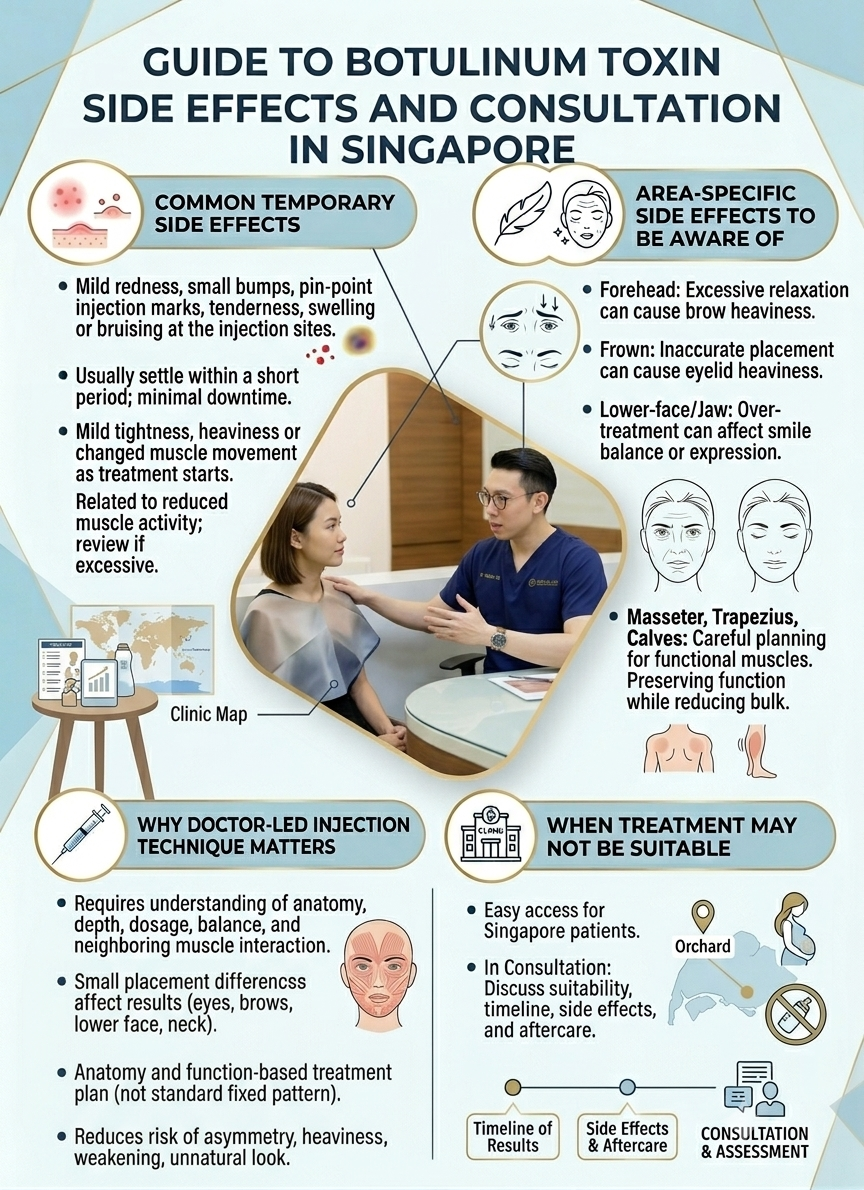
Before treatment, the doctor will confirm the treatment areas, review the planned injection points and ensure that there are no contraindications. The skin is cleaned thoroughly before the injections are performed.
For facial treatments, patients may be asked to make certain facial expressions, such as raising the eyebrows, frowning or smiling. This allows the doctor to identify the active muscles more accurately before placing the injections.
Botulinum toxin is injected into selected muscles using a fine needle. Most patients describe the sensation as brief and tolerable, with only mild discomfort during the injection.
The number of injection points depends on the treatment area. Smaller areas such as frown lines or crow’s feet usually require fewer injection points, while larger muscle groups such as the masseter, trapezius or calf muscles may require more detailed placement and higher total dosage.
After treatment, there may be mild redness, small bumps, pin-point marks or slight tenderness at the injection sites. These usually settle within a short period.
Patients are usually able to return to normal daily activities after treatment. However, aftercare instructions should be followed carefully to reduce the risk of bruising, unnecessary pressure on the treated areas or unintended spread of the product.
For more detailed aftercare instructions, please refer to:
https://botoxsingapore.sg/botox-aftercare-guide-singapore/
Most patients need at least six to eight weeks to notice fewer new breakouts. More substantial improvement may take two to three months or longer, particularly when hormonal acne is deep, cystic or persistent.
The hormonal acne treatment timeline varies according to the severity of the breakouts, the treatment selected, previous treatment response and how consistently the treatment plan is followed. Post-acne redness and pigmentation may also fade more slowly than the active pimples, so persistent marks do not necessarily mean that the acne treatment is ineffective.
An initial review is commonly arranged after approximately eight to twelve weeks. This provides sufficient time to assess the treatment response without changing an appropriate regimen before it has had an adequate opportunity to work.
During the review, the doctor may consider:
Treatment may then be continued, adjusted or changed according to the response. An earlier review may be appropriate if the acne worsens significantly, begins causing scars or produces concerning side effects.
Hormonal acne can return even after the skin has improved because hormonal triggers or increased sensitivity of the sebaceous glands may continue. Recurrence may occur after an effective treatment is stopped or during subsequent hormonal changes.
This does not necessarily mean that the previous treatment was ineffective. It may indicate that the acne requires ongoing maintenance or that the treatment plan should be adjusted as the patient’s circumstances change.
Once hormonal acne is controlled, maintenance treatment may help prevent clogged pores and reduce the formation of new pimples. This commonly involves continuing one or more well-tolerated, non-antibiotic topical treatments rather than stopping all treatment immediately.
Selected women who respond well to hormonal medication may continue treatment for a longer period with appropriate medical review. Oral antibiotics are generally not used for maintenance because prolonged or repeated use increases the risk of antibiotic resistance.
The maintenance plan should be reviewed periodically and adjusted according to acne control, side effects, medical history and pregnancy plans. The aim is to use the simplest sustainable regimen that keeps the acne controlled while minimising irritation and unnecessary medication.
Can Hormonal Acne Be Treated Without Birth Control Pills?
Yes. Combined oral contraceptive pills are only one possible treatment and are not required or suitable for every woman with hormonal acne.
Depending on the acne pattern and severity, treatment may include medical skincare, topical medication, non-hormonal oral medication or selected in-clinic procedures. Spironolactone may also be considered separately for suitable women, but it is not a contraceptive and must not be used during pregnancy.
Can Diet Cause or Worsen Hormonal Acne?
Diet is not the sole cause of hormonal acne. Some studies suggest that high-glycaemic foods or cow’s milk may be associated with more breakouts in certain individuals, but the evidence is not consistent enough to recommend the same restrictive diet for every patient.
Patients who notice a repeated relationship between a particular food and their breakouts may find it useful to record their diet and acne pattern. Unnecessarily eliminating entire food groups is generally not recommended without an appropriate nutritional reason.
Can Stress Make Hormonal Acne Worse?
Stress does not necessarily cause hormonal acne by itself, but it may contribute to flare-ups. Stress-related hormonal changes may stimulate oil-gland activity and inflammation, while disrupted sleep or inconsistent skincare may further aggravate acne.
Managing stress and maintaining regular sleep may support overall acne control, but these measures should complement rather than replace appropriate skincare or medical treatment.
Does Hormonal Acne Go Away After Menopause?
Hormonal acne may improve after menopause in some women, but this is not guaranteed. Hormonal changes during perimenopause and menopause may also cause persistent adult acne or trigger new breakouts, even when the skin has become drier or more sensitive.
Acne that begins suddenly, becomes unusually severe or occurs with other signs of increased androgen activity should be medically assessed rather than assumed to be a normal part of menopause.
When Should I See a Doctor for Hormonal Acne?
A medical assessment should be considered when acne:
Early assessment may help control active inflammation, prevent additional breakouts and reduce the risk of persistent marks or acne scars.
Persistent or recurrent hormonal acne should be assessed according to the pattern and severity of the breakouts, previous treatment response and risk of pigmentation or scarring.
At Edwin Lim Medical Aesthetic Clinic, hormonal acne consultations are conducted by Dr Edwin Lim. Following an assessment, a personalised treatment plan may include medical skincare, topical or oral medication, hormonal treatment for selected women and suitable in-clinic procedures.
Consultations are available at:
To arrange a consultation, WhatsApp +65 9637 2218 or call +65 6904 2218.
The cost of botulinum toxin treatment in Singapore varies depending on the treatment area, number of muscles treated, dosage required, complexity of the injection plan and whether the treatment is performed for facial lines, facial slimming, body contouring or excessive sweating. A doctor’s assessment is needed to determine the appropriate dose and treatment approach.
Different treatment areas require different levels of planning and product dosage. Smaller facial areas, such as frown lines or crow’s feet, usually involve fewer injection points compared with larger muscle areas such as the masseter, trapezius or calf muscles.
The cost may therefore differ depending on whether the treatment is for expression lines, jaw slimming, shoulder slimming, calf slimming or excessive underarm sweating.
Botulinum toxin treatment is commonly planned according to the number of units required for the target muscle. The required dosage depends on muscle size, muscle strength, treatment goals, previous treatment history and the desired degree of muscle relaxation.
For example, a patient with stronger masseter muscles may require a different dose compared with someone with milder muscle activity. Similarly, larger body muscles usually require a different dosage approach compared with smaller facial muscles.
For more information on dosage planning, please refer to:
https://botoxsingapore.sg/blog/how-much-botox-is-needed-guide-to-botox-dosage/
Larger muscles such as the masseter, trapezius and calf muscles generally require a higher total dosage than smaller facial muscles. This is because the treatment needs to reduce activity across a larger muscle area while maintaining safety and function.
The appropriate dose should be personalised rather than chosen based only on the treatment name. Careful assessment helps balance visible results, natural movement, safety and cost-effectiveness.
A consultation allows the doctor to assess the treatment area, muscle strength, facial or body anatomy, treatment goals and whether botulinum toxin is suitable. After assessment, the clinic can advise on the recommended treatment plan and estimated cost.
Patients should avoid choosing treatment based only on the lowest advertised price, as dosage, dilution, injector experience, assessment quality and aftercare can all affect the overall safety and outcome.

Copyrights 2026 by Edwin Lim Medical Aesthetic Clinic Pte. Ltd.


