Teenage acne during puberty can range from mild clogged pores to painful, inflamed cystic breakouts. Treatment focuses on controlling active breakouts early, calming inflammation, and preventing long-term red marks, dark spots, and permanent scarring through tailored medical care.
1. When to Consult a Doctor
Breakouts: Painful, swollen, or deep cystic pimples on the face, chest, or back.
Lack of Progress: Acne worsens or fails to improve with over-the-counter skincare.
Skin Damage: Pimples leave red marks, dark spots, or early depressed scars.
2. Treatment Options
Medical Skincare & Topicals: Gentle cleansing, oil control, and topical treatments to unclog pores and reduce bacteria.
Oral Medications: Antibiotics (e.g., Doxycycline) or Isotretinoin (Accutane/Acnotin) for severe, persistent, or scarring acne.
In-Clinic Procedures:
Acne Facials: Decongest blackheads and whiteheads.
Pimple Injections: Quick relief for isolated, large inflamed cysts.
Lasers (e.g., Pro Yellow): Target active inflammation and redness.
Scar Recovery: Treatments like subcision, Rejuran S, and lasers are used after active acne is fully controlled.
3. Essential Rules for Teens
Never Squeeze or Pick: Squeezing forces inflammation deeper and dramatically increases the risk of permanent scarring.
Simplify Skincare: Avoid harsh scrubs, frequent product changes, or aggressive exfoliation that damages the skin barrier.
Smart Hygiene: Cleanse promptly after sweating and avoid heavy, pore-clogging cosmetics or hair products.
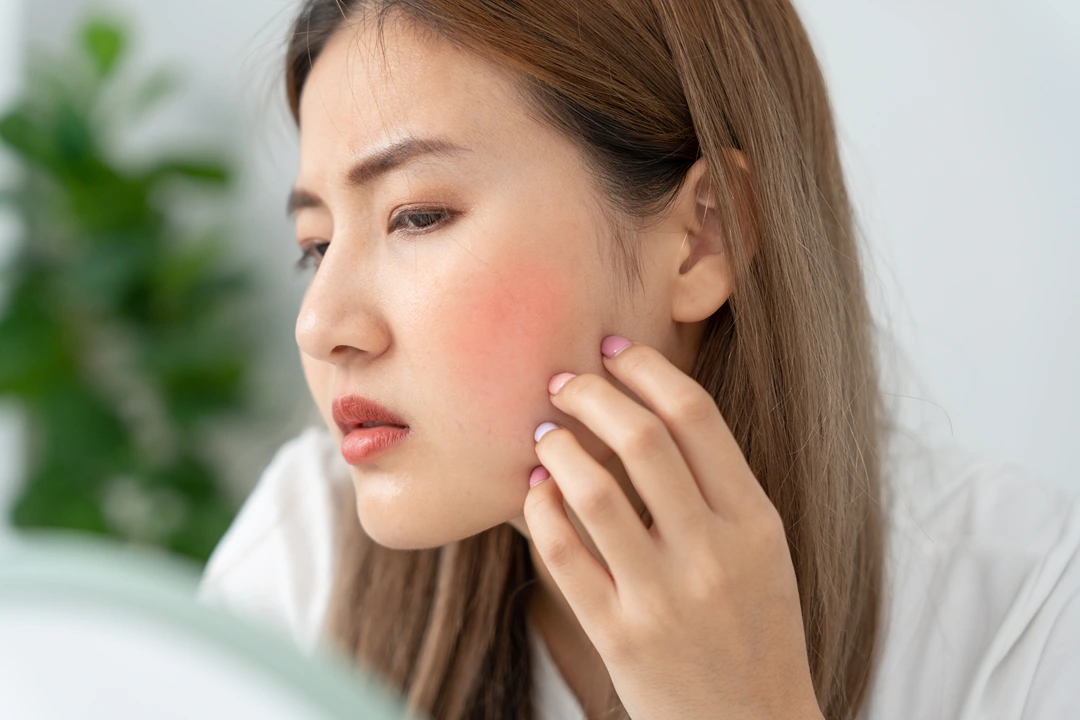
Mild pimples during puberty are common, especially when they appear occasionally and settle without leaving marks. However, teenage acne may need medical treatment if the breakouts are persistent, inflamed, painful, spreading to the chest or back, or starting to leave red acne marks, dark acne marks or early acne scars.
The table below provides a general guide for parents and teenagers.
|
Acne Pattern |
What It May Suggest |
When to Seek Medical Advice |
|
Occasional small pimples |
Mild puberty acne |
If pimples become more frequent or do not improve with suitable skincare |
|
Whiteheads and blackheads |
Clogged pores and oily skin |
If congestion is persistent or worsening |
|
Red inflamed pimples |
Inflammatory teenage acne |
If pimples are painful, frequent or leaving marks |
|
Large painful cystic pimples |
Deeper acne with higher scarring risk |
Early medical assessment is recommended |
|
Acne on the chest, shoulders or back |
More widespread acne |
If body acne is persistent, inflamed or leaving marks |
|
Red or dark acne marks |
Post-acne inflammation or pigmentation |
If marks are increasing or acne is still active |
|
Early dents or depressed scars |
Possible acne scarring |
Treatment should not be delayed |
Teenage acne should not be ignored if it is affecting confidence, causing discomfort or leaving visible marks. Early treatment can help control active breakouts before acne scars become more established.
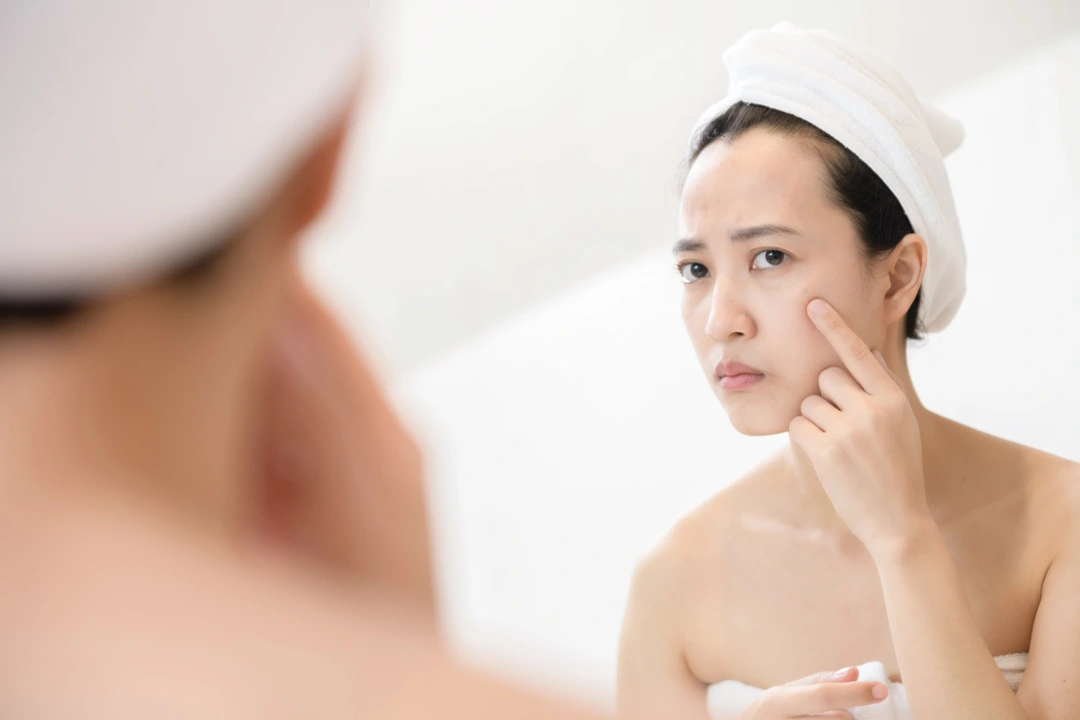
Teenage acne can appear in different ways depending on the teenager’s skin type, oil production, lifestyle habits and acne severity. Understanding the acne pattern is important because different types of teen acne may require different treatment approaches.
Forehead acne is common in teenagers, especially when there is increased oil production around the forehead, nose and chin. This may appear as small bumps, clogged pores, whiteheads, blackheads or red pimples. Hair products, sweat, helmets, caps and frequent touching of the forehead may also contribute to breakouts in this area.
Chin acne and jawline acne may occur in teenagers during puberty due to hormonal changes and increased oil gland activity. In some female teenagers, acne may worsen before menstruation or appear more frequently along the lower face. If chin or jawline acne is persistent, inflamed or recurrent, medical acne treatment may be helpful.
Cystic acne refers to deeper, painful acne lumps that develop under the skin. This type of teenage acne is more likely to cause long-term acne marks and acne scars if left untreated. Teenagers with painful cystic pimples should avoid squeezing or picking at them, as this may worsen inflammation and increase the risk of scarring.
Teenage acne can also affect the chest, shoulders and back. Back acne may be more common in teenagers who sweat frequently, play sports, wear tight clothing or have oily skin. Body acne may require a different treatment approach from facial acne, especially when it is widespread, inflamed or leaving marks.
After pimples settle, some teenagers may develop red acne marks, dark acne marks or early depressed acne scars. Red marks are often related to post-acne inflammation, while dark marks are commonly related to post-inflammatory pigmentation. True acne scars may be more permanent, which is why early control of active teenage acne is important.
Teenage acne treatment in Singapore should be planned according to the severity of acne, the type of pimples present, the teenager’s skin sensitivity and whether there are already acne marks or early acne scars. There is no single best treatment for every teenager, as mild clogged pores, inflamed pimples, cystic acne and back acne may require different treatment approaches.
For best results, teenage acne treatment often involves a combination of suitable skincare, medical acne treatment and procedures where appropriate. The aim is to control active acne early, reduce inflammation, prevent new breakouts and lower the risk of long-term acne scarring.
Learn more about acne treatment in Singapore here:
https://botoxsingapore.sg/acne-treatment-in-singapore-skincare-medications-lasers-and-facials/
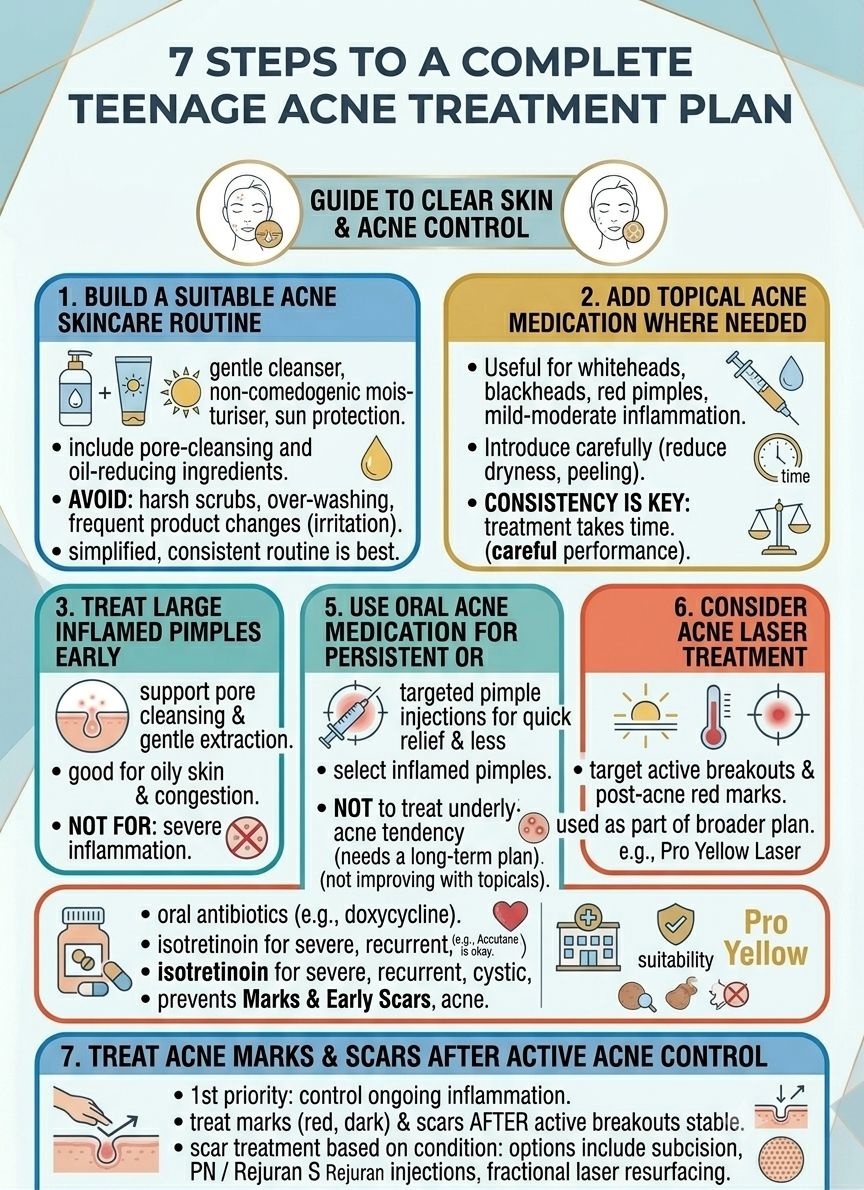
Medical acne skincare may help teenagers with oily skin, clogged pores, whiteheads, blackheads and frequent breakouts. A suitable skincare routine usually focuses on gentle cleansing, oil control, non-comedogenic moisturising and acne ingredients that help reduce pore blockage without overly irritating the skin.
For teenagers, skincare should be practical and sustainable. Overly harsh scrubs, frequent product changes or excessive exfoliation may worsen skin irritation and inflammation. A doctor-guided skincare routine can help support acne control while maintaining the skin barrier.
Topical acne medication may be suitable for teenagers with mild to moderate acne, clogged pores, whiteheads, blackheads and red pimples. These treatments may help reduce pore blockage, calm inflammation, control acne-causing bacteria and prevent new pimples from forming.
Topical medication usually needs to be used consistently over time. Teenagers should be guided on how much to apply, how often to use it and how to reduce irritation, as dryness or peeling may occur when acne medication is started too aggressively.
Oral acne medication may be considered for teenagers with persistent, inflamed, widespread or cystic acne, especially if the acne is not improving with skincare and topical treatment alone. This may include oral antibiotics such as doxycycline in selected cases, or isotretinoin for more severe, cystic, recurrent or scarring acne.
For severe or treatment-resistant teenage acne, isotretinoin may be considered after medical assessment and counselling. Some patients may also know isotretinoin by brand names such as Accutane or Acnotin. The choice of oral acne medication depends on the teenager’s age, acne severity, medical history, blood test requirements and suitability after consultation.
Parents are often concerned about whether oral acne medication is safe for teenagers. When prescribed appropriately after medical assessment, oral acne medication can be an important option for controlling more severe teenage acne and reducing the risk of long-term acne scars.
Learn more about oral acne medication in Singapore here:
https://botoxsingapore.sg/guide-to-oral-acne-medication-singapore/
Learn more about isotretinoin acne treatment in Singapore here:
https://botoxsingapore.sg/isotretinoin-accutane-acnotin-singapore/
Acne facials may be helpful for teenagers with oily skin, congested pores, whiteheads and blackheads. When performed appropriately, acne facials can support pore cleansing, gentle extraction and oil control as part of a broader teenage acne treatment plan.
However, acne facials are not a replacement for medical acne treatment in teenagers with painful cystic acne, moderate to severe inflamed acne or acne that is leaving scars. In these cases, medical treatment may be needed to control inflammation more effectively.
Pimple injections may be considered for selected large, swollen or painful pimples that are not settling well. This may be useful for teenagers who develop an inflamed acne bump or cystic pimple before an important event, or when a specific pimple is causing discomfort.
Pimple injections are usually used for individual inflamed pimples and are not a long-term acne control treatment. Teenagers with frequent painful pimples or recurrent cystic acne may still need a more comprehensive acne treatment plan.
Learn more about pimple injections for acne here:
https://botoxsingapore.sg/cortisone-and-antibiotic-acne-injections-singapore/
Acne laser treatment may be considered for teenagers with inflamed acne, acne redness, persistent breakouts or post-acne red marks. In suitable cases, treatments such as the Pro Yellow Laser may help calm inflammation, reduce redness and support active acne control as part of a broader acne treatment plan.
Acne laser treatment may be combined with medical acne skincare, topical acne medication, oral acne medication or acne facials where suitable. The choice of laser treatment depends on the teenager’s skin type, acne severity, downtime tolerance and treatment goals.
For teenagers with red acne marks, dark acne marks or early acne scars, treatment usually needs to be planned in stages. Active acne should be controlled first before more targeted treatment for acne marks or acne scars is considered.
This is because ongoing inflamed acne can continue to create new marks and scars. Once breakouts are more stable, treatments for post-acne redness, pigmentation or acne scarring may be discussed depending on the teenager’s skin condition and suitability.
Depending on the type of acne marks or scars present, treatment options may include pigmentation lasers for dark acne marks, vascular or redness lasers for red acne marks, subcision for tethered acne scars, PN / Rejuran S scar injections for selected atrophic acne scars, or fractional laser resurfacing for suitable acne scar patterns.
Learn more about acne scar subcision treatment here:
https://botoxsingapore.sg/subcision-acne-scar-treatment-singapore/
Learn more about PN / Rejuran S acne scar treatment here:
https://botoxsingapore.sg/rejuran-s-acne-scar-treatment-singapore/
Teenage acne treatment is usually planned in stages. The right approach depends on whether the teenager has mild clogged pores, oily skin, inflamed pimples, cystic acne, back acne, acne marks or early acne scars.
For many teenagers, treatment starts with simple and sustainable steps before progressing to stronger medical options if needed. The aim is to control acne early, reduce inflammation and prevent long-term acne scarring.
Parents are often concerned about whether acne medication is suitable or safe for teenagers. This is understandable, especially when treatment involves prescription topical medication, oral antibiotics or isotretinoin for more severe acne.
Not every teenager with acne needs oral medication. For mild teenage acne, treatment may begin with suitable skincare and topical acne medication. However, if acne is persistent, painful, cystic, widespread or already leaving red marks, dark marks or early scars, stronger treatment may be considered to reduce inflammation and lower the risk of long-term acne scarring.
Oral antibiotics such as doxycycline may be used in selected cases of inflammatory acne. For more severe, recurrent, cystic or scarring acne, isotretinoin may be discussed if suitable. Some patients may know isotretinoin by brand names such as Accutane or Acnotin. These medications should only be used after medical assessment, with proper counselling on suitability, expected results, possible side effects and any monitoring that may be required.
The goal of acne medication is not to overtreat teenage pimples, but to control acne appropriately before it causes more persistent skin damage. A doctor-guided approach allows treatment to be adjusted based on the teenager’s age, acne severity, skin sensitivity, medical history and response to treatment.
Learn more about oral acne medication in Singapore here:
https://botoxsingapore.sg/guide-to-oral-acne-medication-singapore/
Before treatment, the doctor will confirm the treatment areas, review the planned injection points and ensure that there are no contraindications. The skin is cleaned thoroughly before the injections are performed.
For facial treatments, patients may be asked to make certain facial expressions, such as raising the eyebrows, frowning or smiling. This allows the doctor to identify the active muscles more accurately before placing the injections.
Botulinum toxin is injected into selected muscles using a fine needle. Most patients describe the sensation as brief and tolerable, with only mild discomfort during the injection.
The number of injection points depends on the treatment area. Smaller areas such as frown lines or crow’s feet usually require fewer injection points, while larger muscle groups such as the masseter, trapezius or calf muscles may require more detailed placement and higher total dosage.
After treatment, there may be mild redness, small bumps, pin-point marks or slight tenderness at the injection sites. These usually settle within a short period.
Patients are usually able to return to normal daily activities after treatment. However, aftercare instructions should be followed carefully to reduce the risk of bruising, unnecessary pressure on the treated areas or unintended spread of the product.
For more detailed aftercare instructions, please refer to:
https://botoxsingapore.sg/botox-aftercare-guide-singapore/
One of the main goals of teenage acne treatment is to reduce the risk of long-term acne marks and acne scars. While some mild pimples may settle without lasting changes, persistent inflamed acne, cystic acne and repeated squeezing or picking can increase the risk of red acne marks, dark acne marks and depressed acne scars.
Red acne marks are often related to post-acne inflammation, while dark acne marks are commonly related to post-inflammatory pigmentation. These marks may gradually improve over time, but they can last for months if acne remains active or if the skin is repeatedly irritated.
True acne scars are different from acne marks. Acne scars may appear as dents, uneven texture, rolling scars, boxcar scars or ice pick scars. These scars are usually more permanent and may require separate acne scar treatment once active acne is better controlled.
For teenagers, the first priority is usually to control active acne early. This helps reduce ongoing inflammation and lowers the chance of new marks or scars forming. Once breakouts are more stable, treatments for red acne marks, dark acne marks or early acne scars may be considered depending on the teenager’s skin condition and suitability.
Learn more about pigmentation treatment for dark acne marks here:
https://botoxsingapore.sg/pigmentation-treatment-in-singapore/
Learn more about subcision acne scar treatment here:
https://botoxsingapore.sg/subcision-acne-scar-treatment-singapore/
Teenagers with acne should avoid squeezing, picking or aggressively scrubbing pimples, as this may worsen inflammation and increase the risk of red acne marks, dark acne marks and acne scars.
It is also important to avoid frequently changing skincare products, layering too many active ingredients or using harsh exfoliating scrubs without guidance. While teenagers may want quick results, over-treating the skin can cause irritation, dryness and sensitivity, which may make acne harder to control.
Hair products, heavy makeup, oily sunscreens, helmets, caps and sweat after sports may also contribute to clogged pores in some teenagers. Simple habits such as cleansing after sweating, using non-comedogenic products and keeping hair away from acne-prone areas may help support acne control.
If acne is persistent, painful, inflamed or leaving marks despite these measures, it may be better to seek medical advice rather than repeatedly trying new over-the-counter products.
For facial expression lines such as forehead lines, frown lines and crow’s feet, results commonly last around three to four months. Some patients may notice that movement gradually returns earlier, while others may maintain a softer appearance for longer.
Duration can depend on the dosage used, strength of the treated muscles, facial expression habits, metabolism and previous treatment history.
Larger muscle treatments, such as masseter reduction, trapezius reduction and calf slimming, may have a different treatment timeline. While muscle activity may reduce within the first few weeks, visible contouring changes usually develop more gradually.
For these larger muscles, repeat sessions may be recommended depending on the muscle size, response to treatment and desired degree of contouring. The treatment plan should be reviewed individually rather than based on a fixed schedule.
Some patients may find that results wear off faster due to stronger muscle activity, higher baseline muscle bulk, frequent use of the treated muscles, faster metabolism or a conservative starting dose.
For example, patients who clench their jaw frequently may notice earlier return of masseter muscle activity. Patients with very strong frown or forehead muscles may also require careful dose adjustment during future sessions.
The ideal treatment interval depends on the area treated, response to treatment and personal goals. Facial wrinkle-relaxing treatments are commonly repeated when muscle movement has gradually returned and lines become more visible again.
For larger muscle or sweating-related treatments, the repeat interval may differ. A doctor’s review helps determine whether maintenance treatment is appropriate and whether the dosage or injection points should be adjusted.
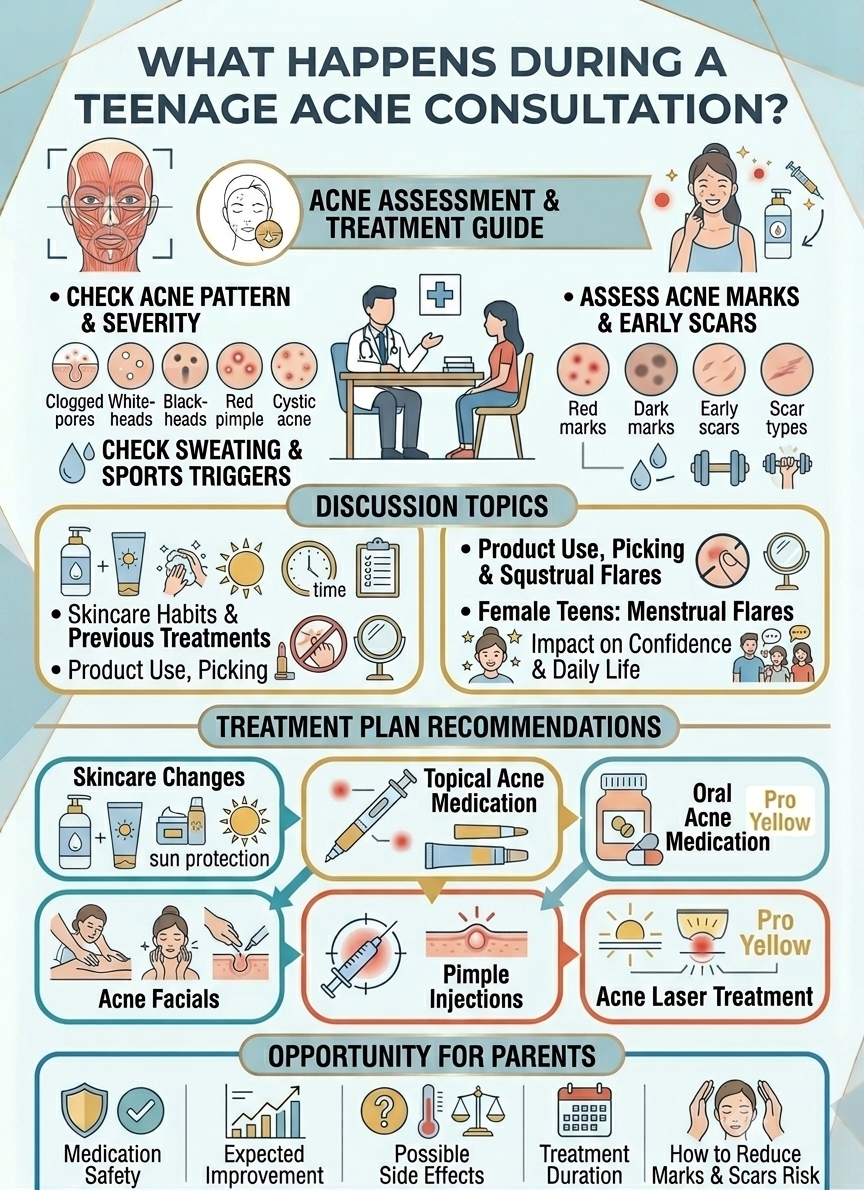
If your teenager has persistent pimples, inflamed acne, painful cystic acne, acne marks or early acne scars, a doctor-guided assessment can help determine the most suitable treatment approach.
At Edwin Lim Medical Aesthetic Clinic, Dr Edwin Lim provides teenage acne treatment in Singapore with treatment plans tailored according to the teenager’s acne severity, skin type, medical history and risk of scarring.
Early treatment may help control active acne, reduce inflammation and lower the risk of long-term acne scars. This is especially important if the acne is worsening despite skincare, affecting confidence or leaving visible marks after pimples settle.
Contact us to arrange a teenage acne treatment consultation with Dr Edwin Lim here:
https://botoxsingapore.sg/contact-us/
The cost of botulinum toxin treatment in Singapore varies depending on the treatment area, number of muscles treated, dosage required, complexity of the injection plan and whether the treatment is performed for facial lines, facial slimming, body contouring or excessive sweating. A doctor’s assessment is needed to determine the appropriate dose and treatment approach.
Different treatment areas require different levels of planning and product dosage. Smaller facial areas, such as frown lines or crow’s feet, usually involve fewer injection points compared with larger muscle areas such as the masseter, trapezius or calf muscles.
The cost may therefore differ depending on whether the treatment is for expression lines, jaw slimming, shoulder slimming, calf slimming or excessive underarm sweating.
Botulinum toxin treatment is commonly planned according to the number of units required for the target muscle. The required dosage depends on muscle size, muscle strength, treatment goals, previous treatment history and the desired degree of muscle relaxation.
For example, a patient with stronger masseter muscles may require a different dose compared with someone with milder muscle activity. Similarly, larger body muscles usually require a different dosage approach compared with smaller facial muscles.
For more information on dosage planning, please refer to:
https://botoxsingapore.sg/blog/how-much-botox-is-needed-guide-to-botox-dosage/
Larger muscles such as the masseter, trapezius and calf muscles generally require a higher total dosage than smaller facial muscles. This is because the treatment needs to reduce activity across a larger muscle area while maintaining safety and function.
The appropriate dose should be personalised rather than chosen based only on the treatment name. Careful assessment helps balance visible results, natural movement, safety and cost-effectiveness.
A consultation allows the doctor to assess the treatment area, muscle strength, facial or body anatomy, treatment goals and whether botulinum toxin is suitable. After assessment, the clinic can advise on the recommended treatment plan and estimated cost.
Patients should avoid choosing treatment based only on the lowest advertised price, as dosage, dilution, injector experience, assessment quality and aftercare can all affect the overall safety and outcome.
What is the best treatment for teenage acne?
The best treatment for teenage acne depends on the type and severity of acne. Mild teenage pimples may improve with suitable skincare and topical acne medication, while persistent, inflamed, cystic or scarring acne may require oral acne medication, acne facials, pimple injections or acne laser treatment where suitable.
When should a teenager see a doctor for acne?
A teenager should consider seeing a doctor for acne if the acne is painful, inflamed, persistent, worsening despite over-the-counter skincare, or leaving red acne marks, dark acne marks or early acne scars. Early treatment may help control inflammation before acne scars become more established.
Is teenage acne normal during puberty?
Teenage acne is common during puberty because hormonal changes can increase oil production and clog pores. However, acne should not always be ignored as a normal phase, especially if it is cystic, painful, widespread, affecting confidence or leaving marks and scars.
Can teenage acne go away on its own?
Some mild teenage acne may improve over time, but moderate to severe acne may not settle without treatment. If acne keeps recurring, becomes inflamed or leaves marks after pimples heal, medical acne treatment may help reduce the risk of long-term scarring.
Is acne medication safe for teenagers?
Acne medication can be suitable for teenagers when prescribed appropriately after medical assessment. The choice of medication depends on the teenager’s age, acne severity, medical history, skin sensitivity and risk of scarring. Parents can discuss possible side effects, expected improvement and monitoring requirements during consultation.
Can teenagers take doxycycline for acne?
Doxycycline may be considered in selected teenagers with inflammatory acne if suitable. It is usually prescribed after medical assessment and should be taken according to the doctor’s instructions. It may not be suitable for every teenager, and the treatment plan depends on acne severity, medical history and other factors.
Can teenagers take isotretinoin, Accutane or Acnotin for acne?
Isotretinoin may be considered for suitable teenagers with severe, cystic, recurrent or scarring acne. Some patients may know isotretinoin by brand names such as Accutane or Acnotin. This treatment requires proper medical assessment, counselling and monitoring before and during treatment.
Learn more about isotretinoin acne treatment in Singapore here:
https://botoxsingapore.sg/isotretinoin-accutane-acnotin-singapore/
Are pimple injections suitable for teenagers?
Pimple injections may be considered for selected large, swollen or painful pimples in teenagers. They are usually used for specific inflamed pimples and are not a replacement for long-term acne control. Teenagers with frequent cystic pimples may still need a broader acne treatment plan.
Learn more about pimple injections for acne here:
https://botoxsingapore.sg/cortisone-and-antibiotic-acne-injections-singapore/
Can acne laser treatment help teenage acne?
Acne laser treatment may be considered for teenagers with inflamed acne, acne redness, persistent breakouts or post-acne red marks. In suitable cases, acne lasers such as the Pro Yellow Laser may help calm inflammation and support acne control as part of a broader treatment plan.
How can teenagers prevent acne scars?
Teenagers can reduce the risk of acne scars by treating inflamed acne early, avoiding squeezing or picking pimples, and seeking medical advice for cystic acne or acne that keeps leaving marks. Active acne is usually controlled first before specific acne scar treatments are considered.
Can teenage acne appear on the chest and back?
Yes, teenage acne can appear on the chest, shoulders and back because these areas have more active oil glands. Back acne and body acne may require a different treatment approach from facial acne, especially if the acne is widespread, inflamed or leaving marks.
Should teenagers do acne facials?
Acne facials may be helpful for teenagers with oily skin, clogged pores, whiteheads and blackheads. However, acne facials are not a replacement for medical acne treatment if the teenager has painful cystic acne, moderate to severe inflammation or acne that is leaving scars.
Related Acne Treatment Pages
You may also find these acne treatment pages helpful:
Learn more about acne treatment in Singapore here:
https://botoxsingapore.sg/acne-treatment-in-singapore-skincare-medications-lasers-and-facials/
Learn more about oral acne medication in Singapore here:
https://botoxsingapore.sg/guide-to-oral-acne-medication-singapore/
Learn more about isotretinoin, Accutane and Acnotin acne treatment here:
https://botoxsingapore.sg/isotretinoin-accutane-acnotin-singapore/
Learn more about pimple injections for acne here:
https://botoxsingapore.sg/cortisone-and-antibiotic-acne-injections-singapore/
Learn more about pigmentation treatment for dark acne marks here:
https://botoxsingapore.sg/pigmentation-treatment-in-singapore/
Learn more about subcision acne scar treatment here:
https://botoxsingapore.sg/subcision-acne-scar-treatment-singapore/
Learn more about PN / Rejuran S acne scar treatment here:
https://botoxsingapore.sg/rejuran-s-acne-scar-treatment-singapore/

Copyrights 2026 by Edwin Lim Medical Aesthetic Clinic Pte. Ltd.


